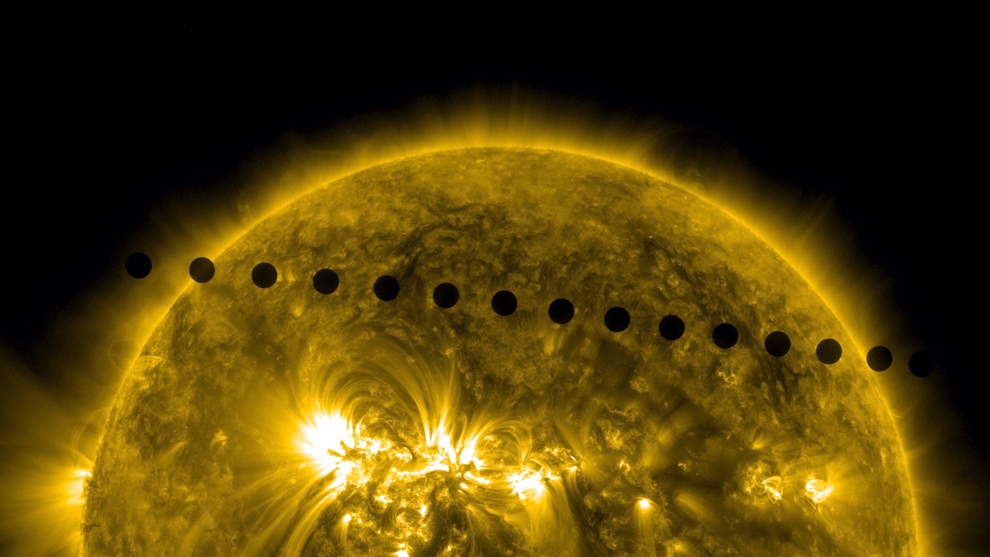
In this composite image provided by NASA, the SDO satellite captures the path sequence of the transit of Venus across the face of the sun at on June 5-6 as seen from space. The last transit was in 2004 and the next pair of events will not happen again until the year 2117 and 2125. (NASA via Getty Images)
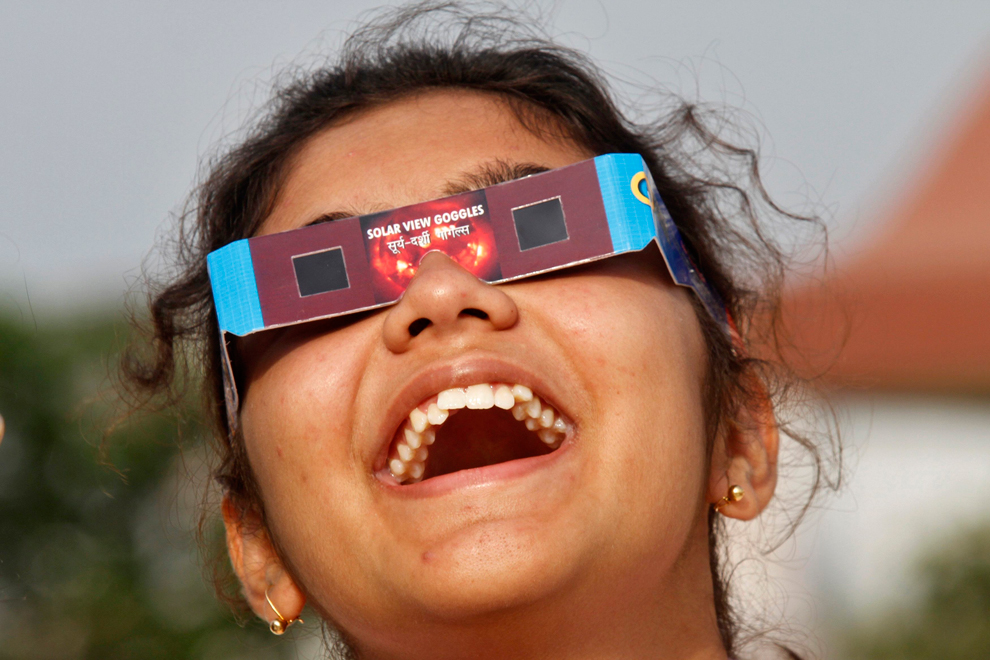
A girl reacts as she uses a pair of eclipse glasses to watch Venus passing the sun in Kolkata, India on June 6. The planet Venus made a slow transit across the face of the sun on Tuesday, the last such passing that will be visible from Earth for 105 years. (Rupak De Chowdhuri/Reuters)
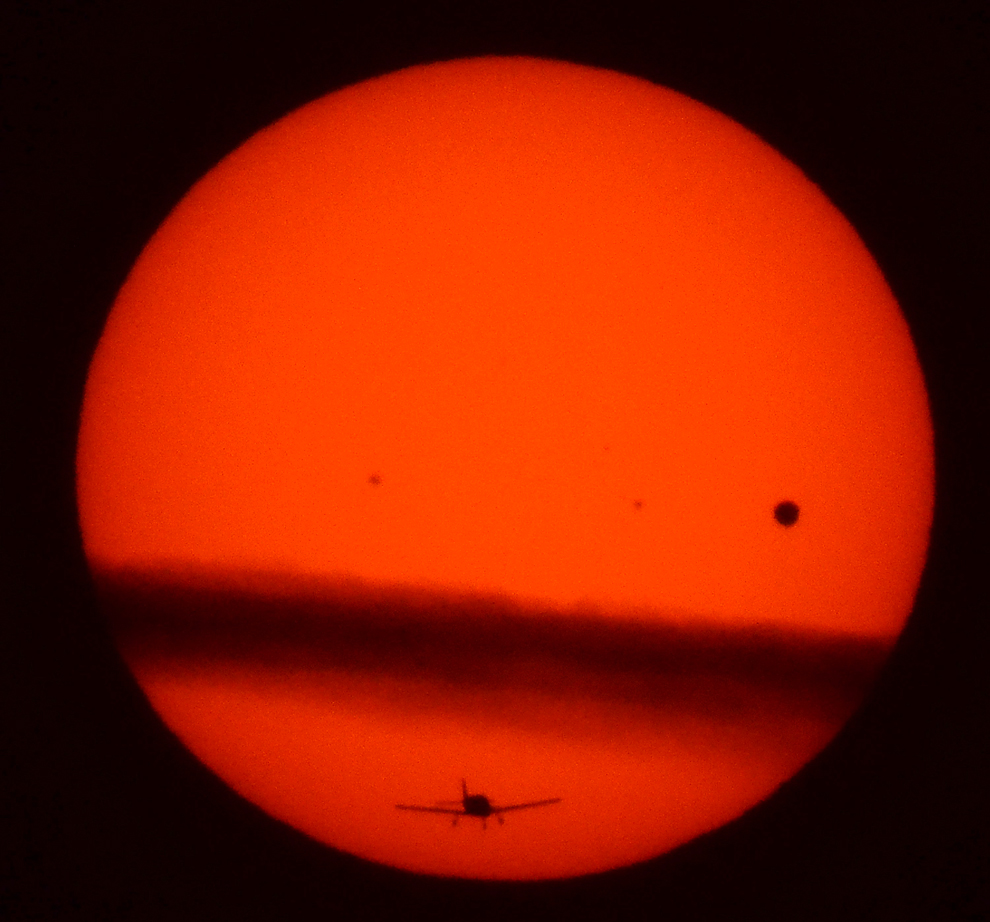
A plane flies under a thin layer cloud crossing the sun as Venus moves past the sun are seen through a coelostat at the Griffith Observatory in Los Angeles on June 5. (Gene Blevins/Reuters)
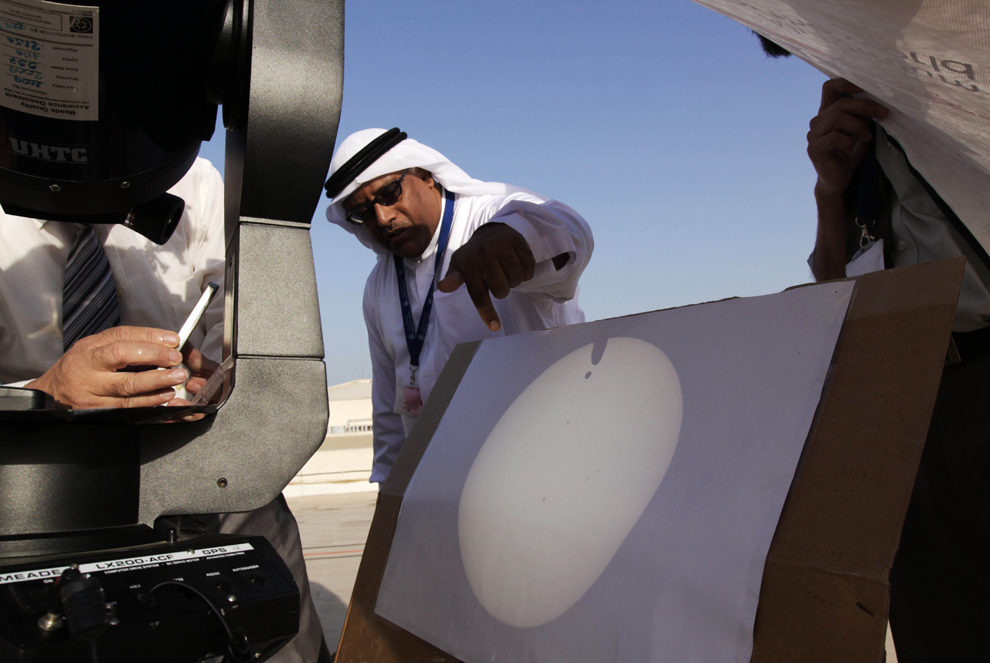
Professor Hashim Ahmed Yousif al-Sayed, dean of the College of Science at the University of Bahrain, points out the planet Venus passing the sun as seen through a telescope projected on paper to a small group of spectators gathered, not pictured, at the campus of a university in Sakhir, Bahrain on June 6. People around the world turned their attention to the daytime sky on Tuesday and early Wednesday in Asia to make sure they caught the rare sight of the transit of Venus. (Hasan Jamali/Associated Press
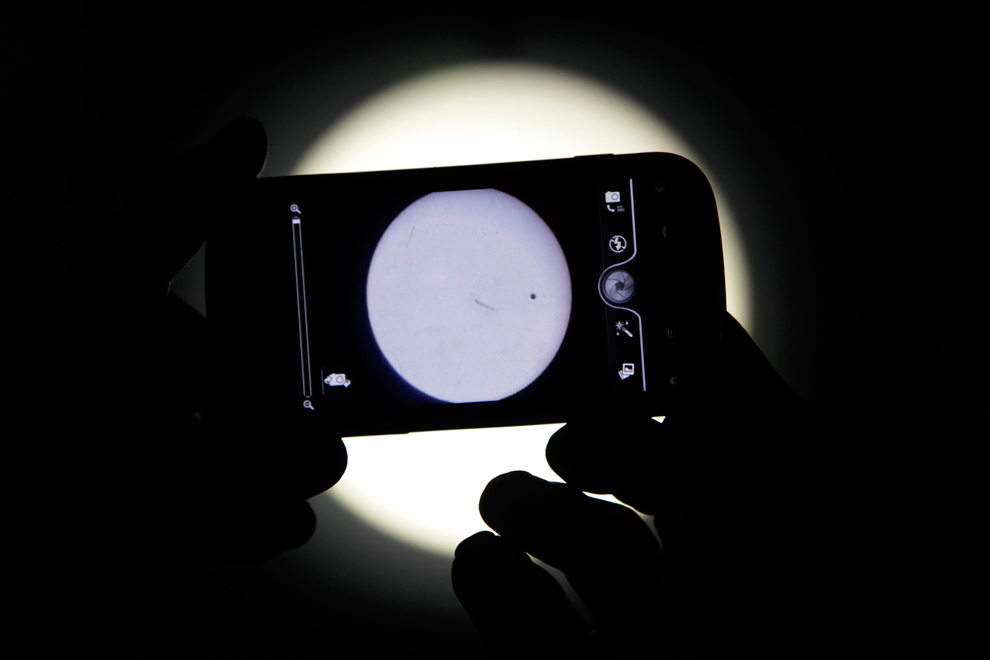
A visitor photographs a live image of Venus moving past the sun showing through a coelostat at the Griffith Observatory in Los Angeles on June 5. (Jae C. Hong/Associated Press)
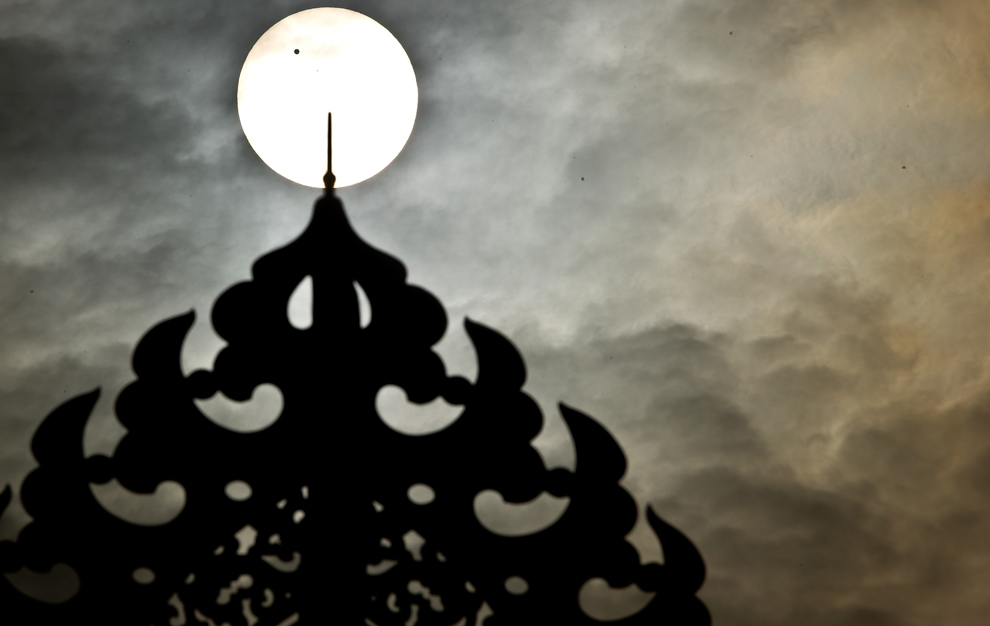
Planet Venus, pictured as a black dot, is seen in transit across the Sun in New Delhi, India on June 6. Sky-gazers around the world held up their telescopes and viewing glasses to watch a once-in-a-lifetime event as Venus slid across the sun. (Manan Vatsyayana/AFP/Getty Images
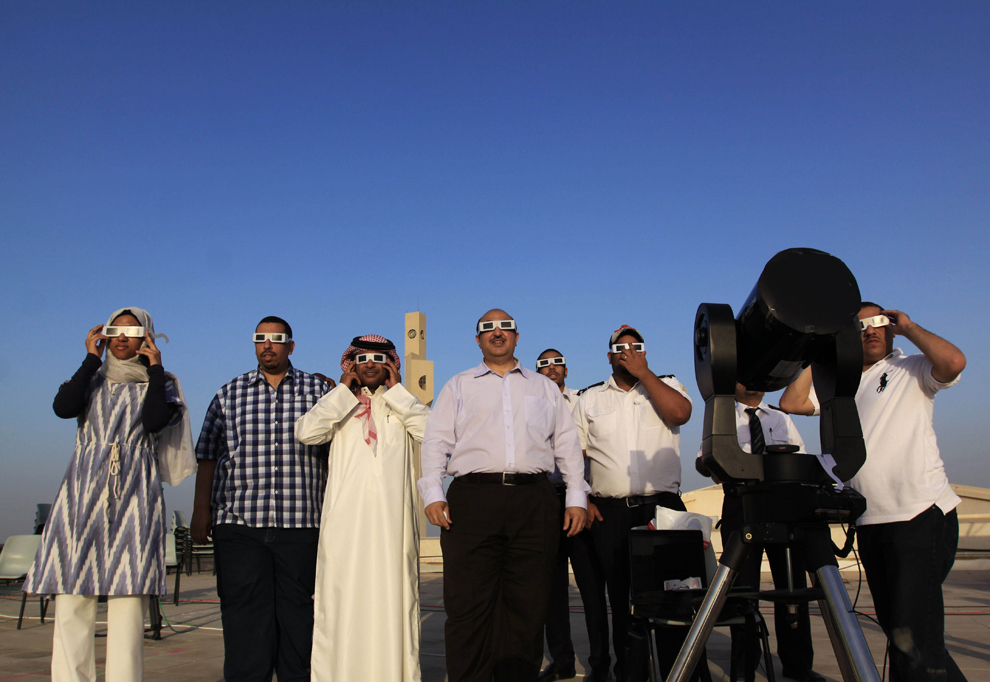
stronomer and Vice President for Planning and Development of Bahrain University, Waheeb Essa al-Naser, (fourth left) watches the planet Venus pass the sun, with a small group of spectators at the university in Sakhir, Bahrain on June 6. (Hasan Jamali/Associated Press
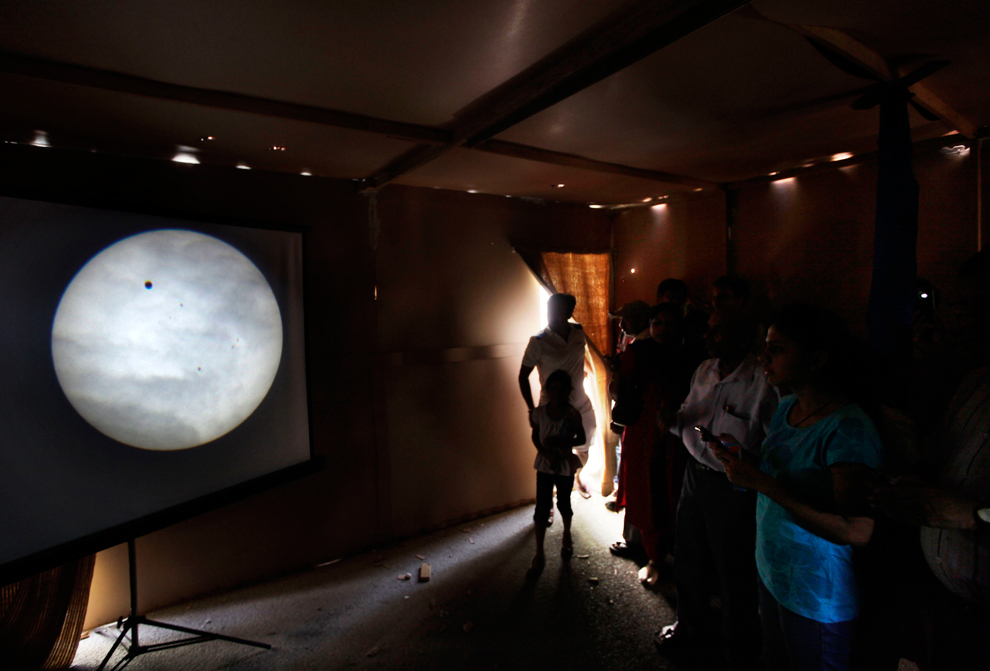
Indians watch the projection of the transit of Venus against the Sun in New Delhi, India on June 6. People around the world turned their attention to the daytime sky on Tuesday and early Wednesday in Asia to make sure they caught the rare sight of the transit of Venus. (Manish Swarup/Associated Press)
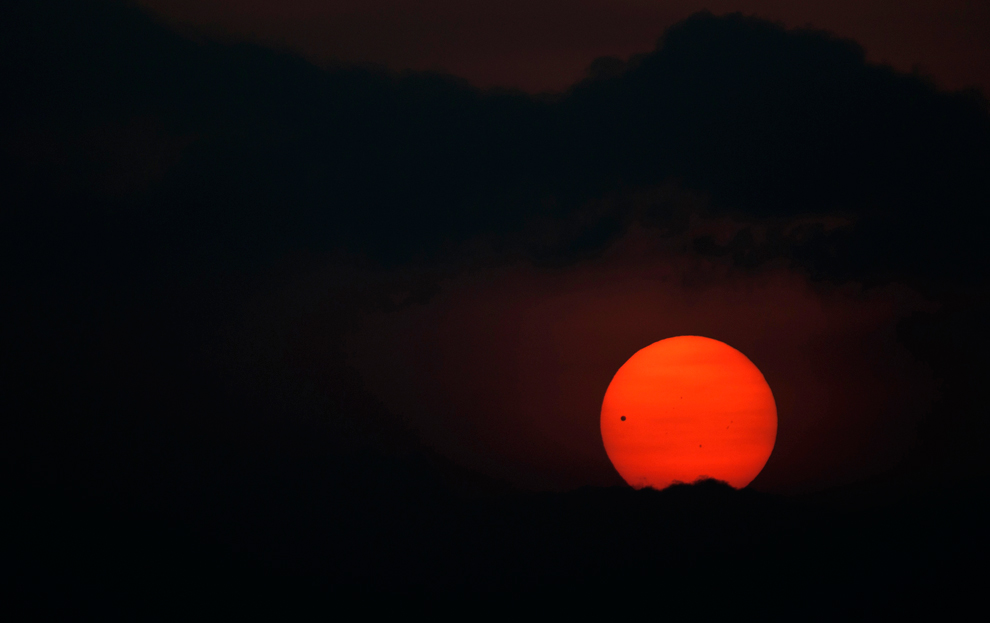
Planet Venus, pictured as a black dot, is seen in transit across the Sun at sunrise in Kathmandu on June 6. Sky-gazers around the world held up their telescopes and viewing glasses to watch a once-in-a-lifetime event as Venus slid across the sun. (Prakash Mathhema/AFP/Getty Images)
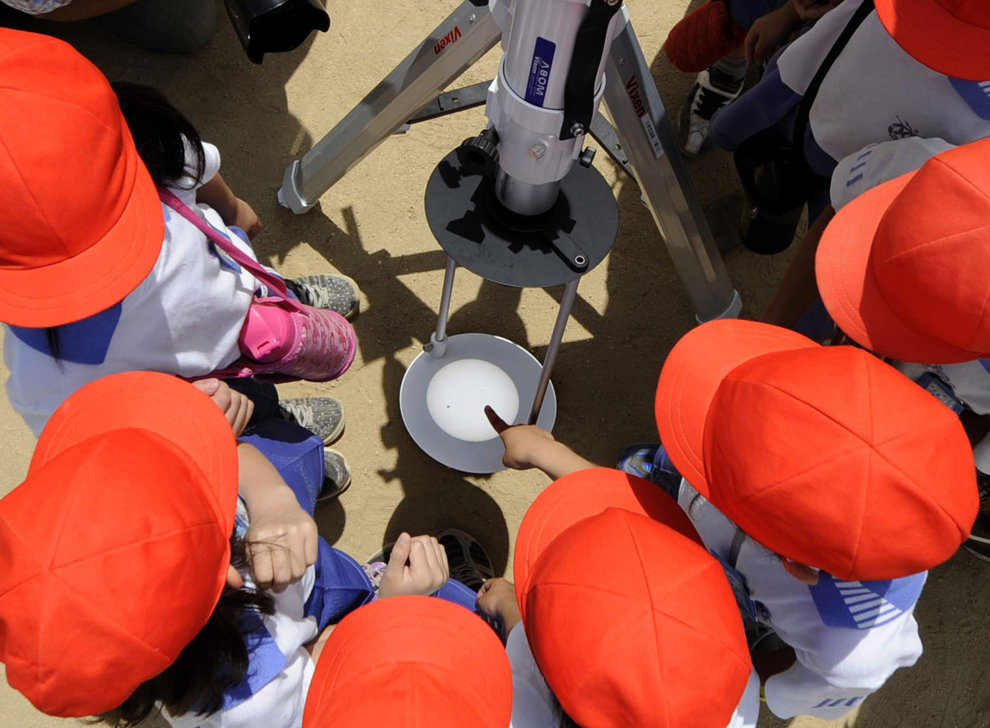
Elementary school students gather to watch the projection of Venus crossing the sun in Kobe, western Japan on June 6. From the U.S. to South Korea, people around the world turned their attention to the daytime sky on Tuesday and early Wednesday in Asia to make sure they caught the rare sight of the transit of Venus. The next one won't be for another 105 years. (Kyodo News via Associated Press

Venus moves across the sun during the transit in Sydney, Australia on June 6. People around the world turned their attention to the daytime sky on Tuesday and early Wednesday in Asia to make sure they caught the rare sight of the transit of Venus. (Rob Griffith/Associated Press
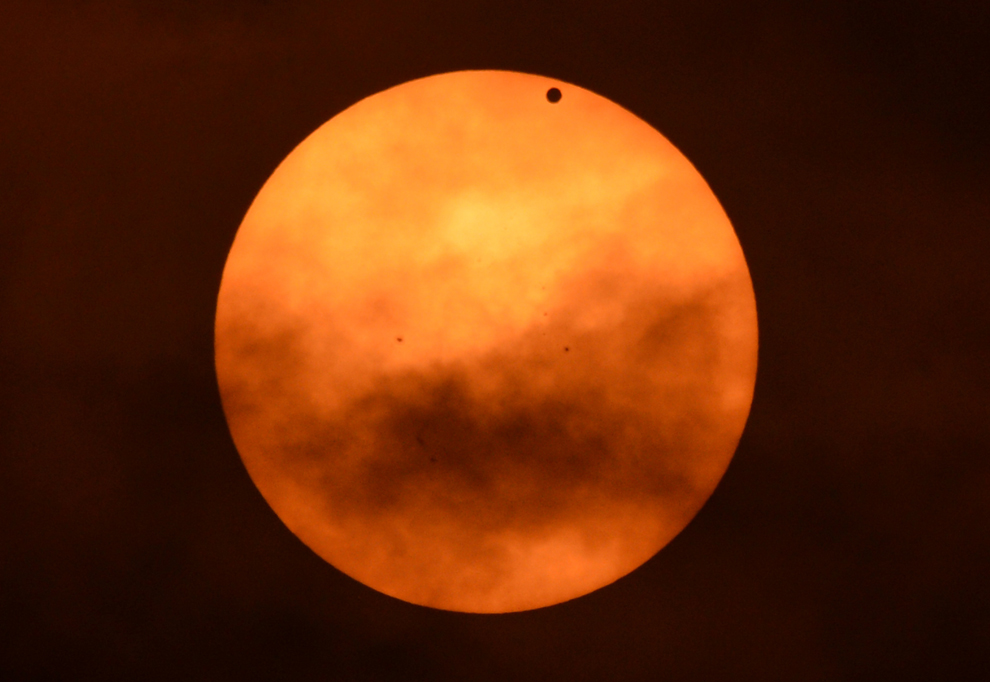
Venus begins to cross the sun's face during the transit of Venus on June 5 as seen from the west side of Manhattan in New York. Astronomers around the world are training their telescopes on the skies to watch Venus pass in front of the sun, a once-in-a-lifetime event that will not be seen for another 105 years. (Stan Hond/AFP/Getty Images)
For all, it was surely a once-in-a-lifetime chance to view the planet Venus as it made its transit past the sun these past two days within view of millions of people on Earth. The last Venus transit was in 2004, and the next pair of events will not happen again until the years 2117 and 2125. Lloyd Young
The Boston Globe
Comments