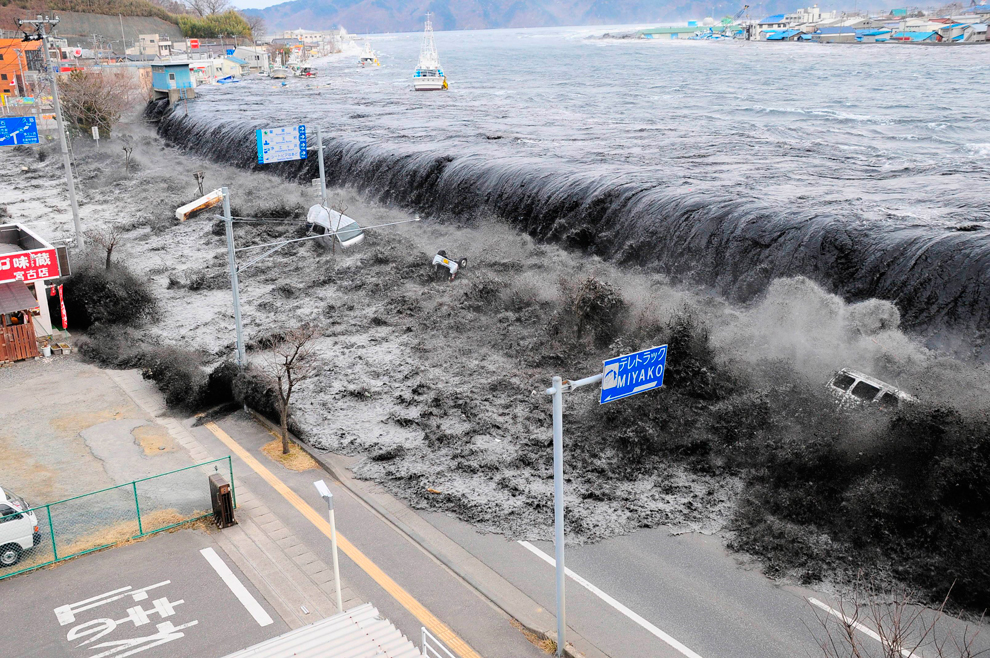
A wave caused by a tsunami flows into the city of Miyako from the Heigawa estuary in Iwate Prefecture after a magnitude 8.9 earthquake struck Japan March 11, 2011. (Mainichi Shimbun /Reuters
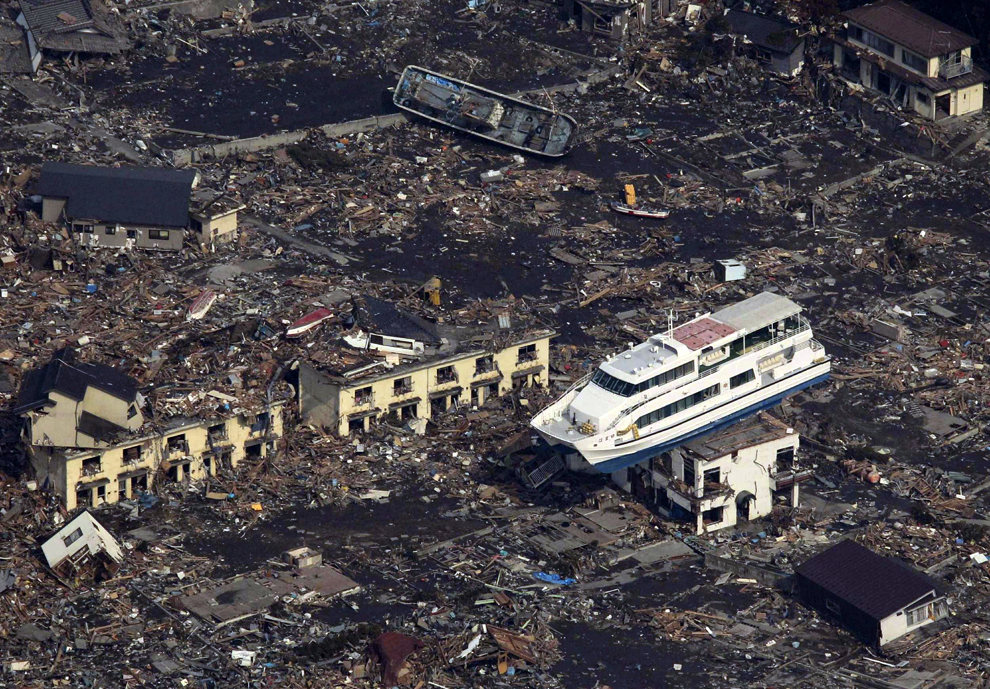
A pleasure boat sits on top of a building amid a sea of debris in Otsuchi town in Iwate prefecture on March 14, 2011. (Yomiuri Shimbun/AFP/Getty Images
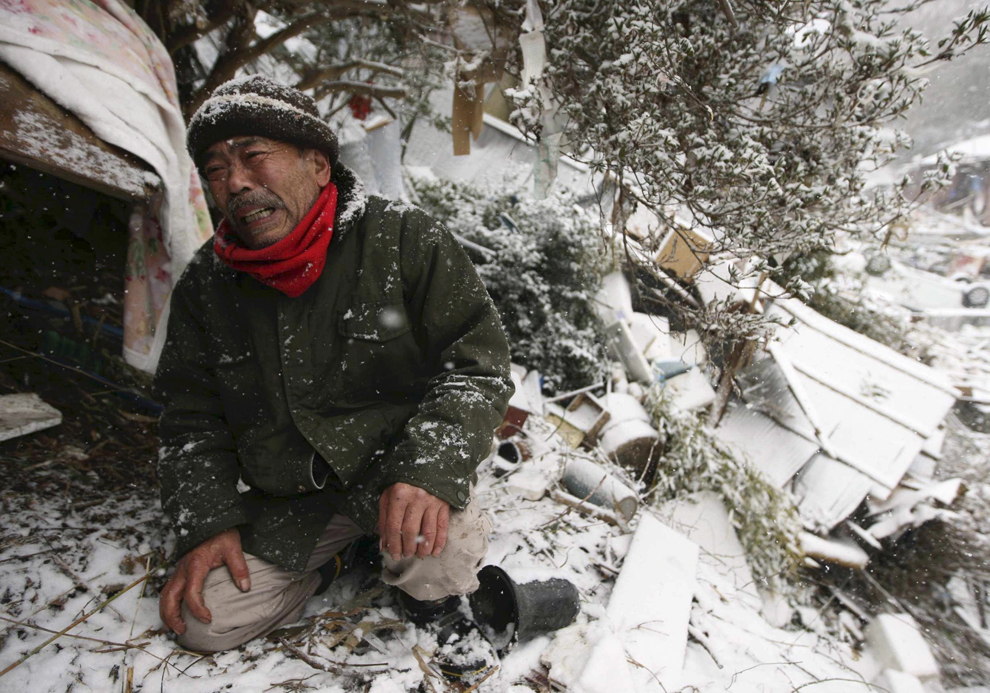
Sixty-six-year-old Yoshikatsu Hiratsuka cries in front of his collapsed house with a family member still missing, possibly buried in the rubble, at Onagawa town in Miyagi prefecture on March 17, 2011. (Yomiuri Shimbun/AFP/Getty Images

Vehicle headlamps illuminated a disaster area in Yamada town in Iwate prefecture on March 16, 2011. (Str/AFP/Getty Images
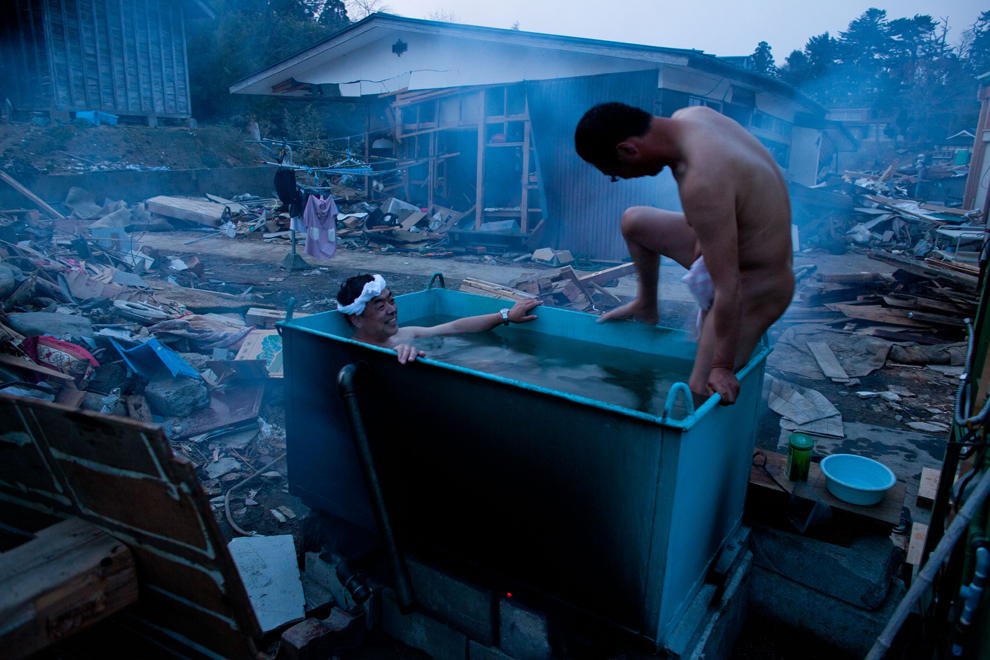
Residents bathe amongst tsunami devastation in Kesennuma city in Miyagi prefecture on April 14, 2011. (Yasuyoshi Chiba/AFP/Getty Images
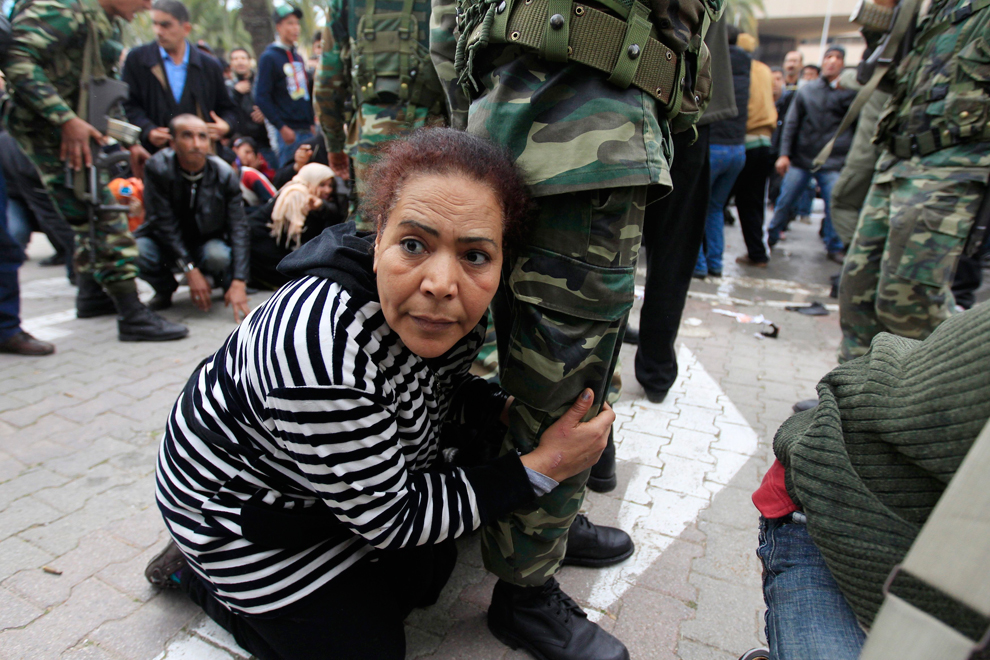
A protester holds a soldier's leg for safety as shots are fired in front of the headquarters of the Constitutional Democratic Rally party of ousted president Zine al-Abidine Ben Ali during a demonstration in downtown Tunis on January 20, 2011. (Zohra Bensemra /Reuters
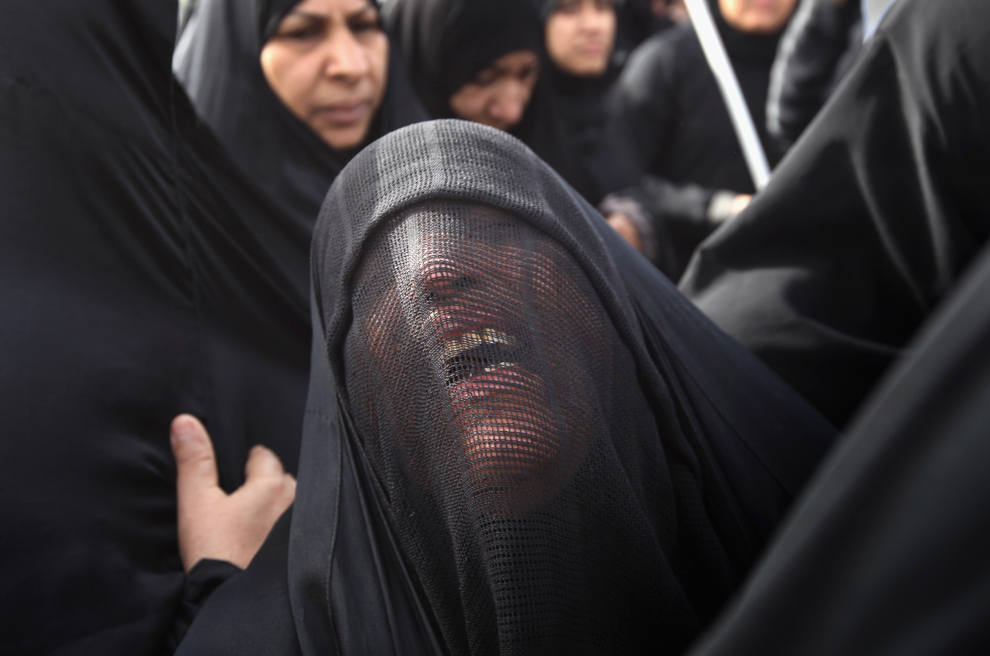
Family members grieve during the funeral procession of anti-government protester Abdul Ridha Mohammed on February 22, 2011 in Malkiya, Bahrain. He had been shot in the head when security forces attacked anti-government demonstrators. (John Moore/Getty Images
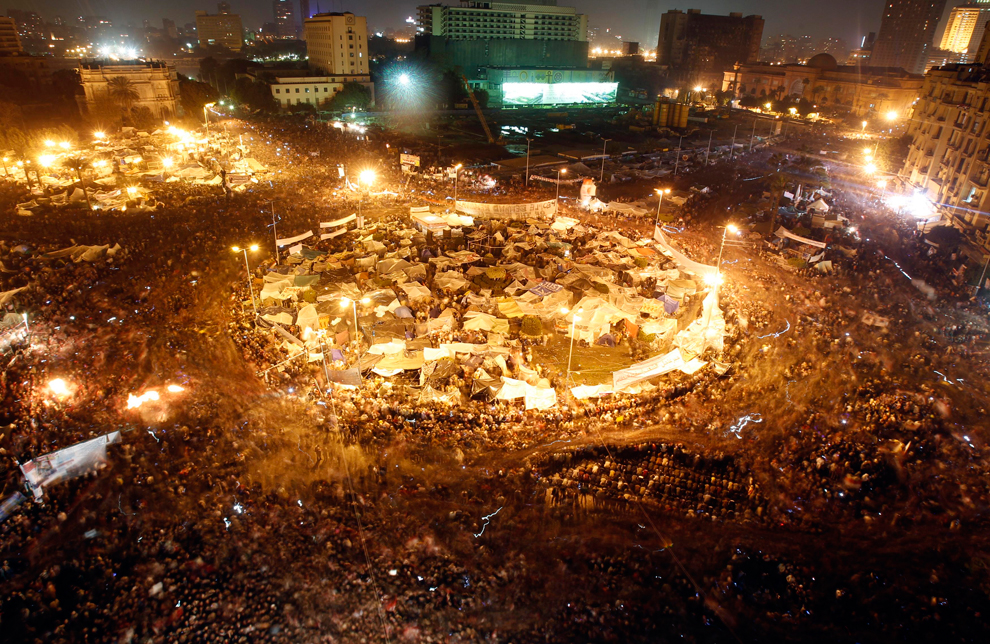
Anti-government protesters celebrate inside Tahrir Square after the announcement that Egyptian President Hosni Mubarak had resigned on February 11, 2011. (Amr Abdallah Dalsh/Reuters

An opposition supporter takes shelter while providing water during riots with pro-Mubarak demonstrators near Tahrir Square in Cairo on February 3, 2011. (Goran Tomasevic/Reuters
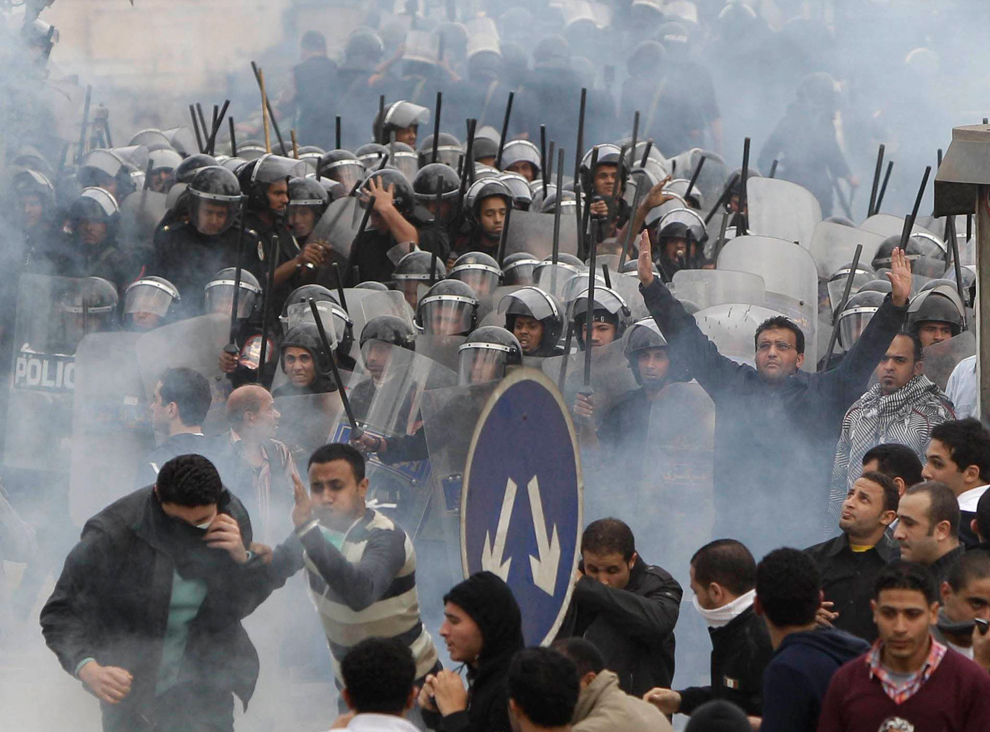
Anti-government activists clash with riot police in Cairo on January 28, 2011. (Ben Curtis/AP
The Boston Globe
Comments