
Chinese folk artists perform the lion dance at a temple fair to celebrate the Lunar New Year on January 22, 2012 in Beijing. Also known as the Spring Festival, which is based on the Lunisolar calendar, it is celebrated from the first day of the first month of the lunar year and ends with the Lantern Festival on the Fifteenth day. (Feng Li/Getty Images
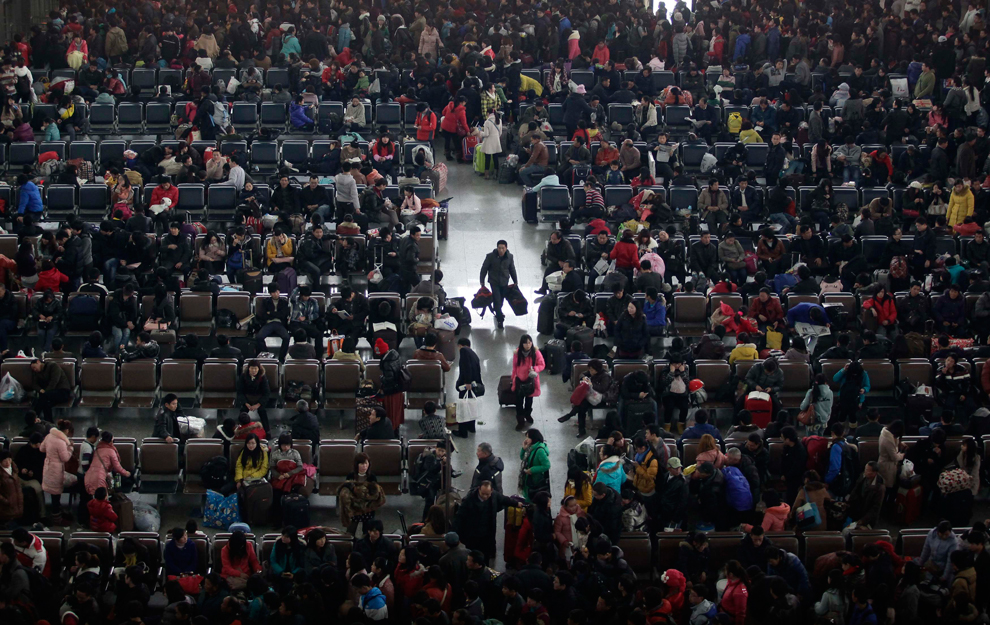
A man walks through the hall of Wuchang Railway Station in Wuhan, China on January 8, 2012. Chinese New Year, or Spring Festival, is the biggest of two "Golden Week" holidays, giving migrant workers their only chance of the year to return to their home provinces. (Stringer/Reuters
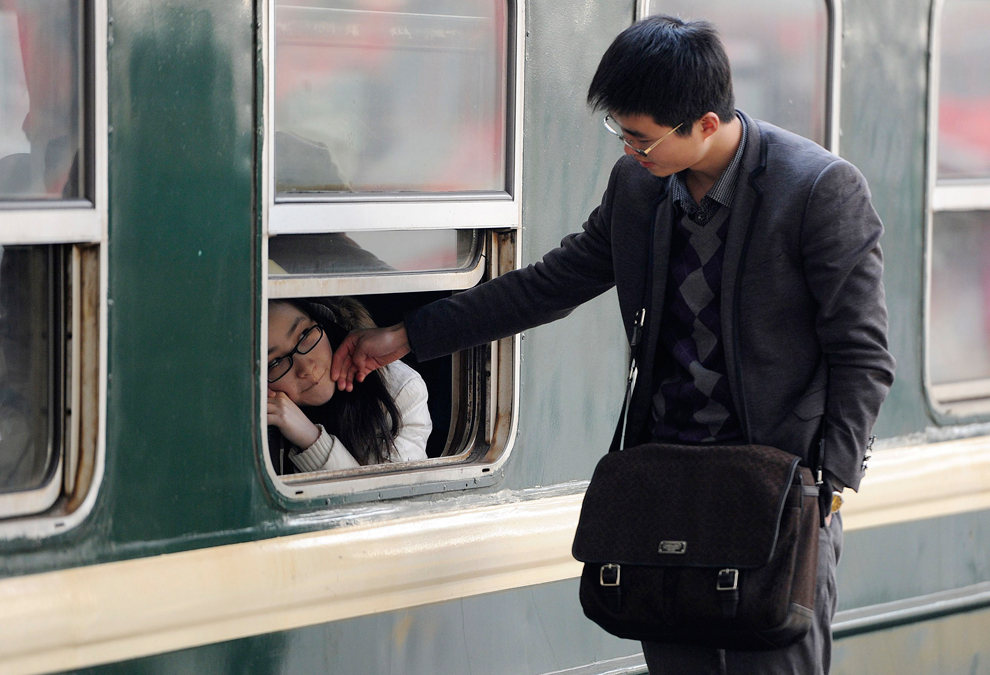
A couple bids farewell through a train window at a railway station in Hefei, China on January 6, 2012. (Stringer/Reuters)
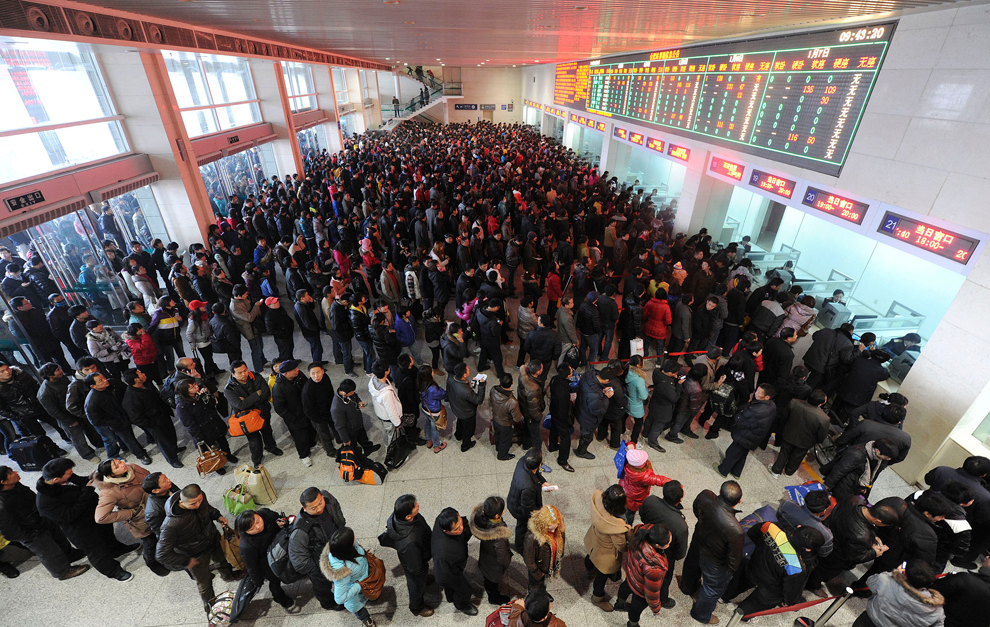
Travelers line up to buy train tickets at a railway station in Hefei, China on December 29, 2012. (Associated Press
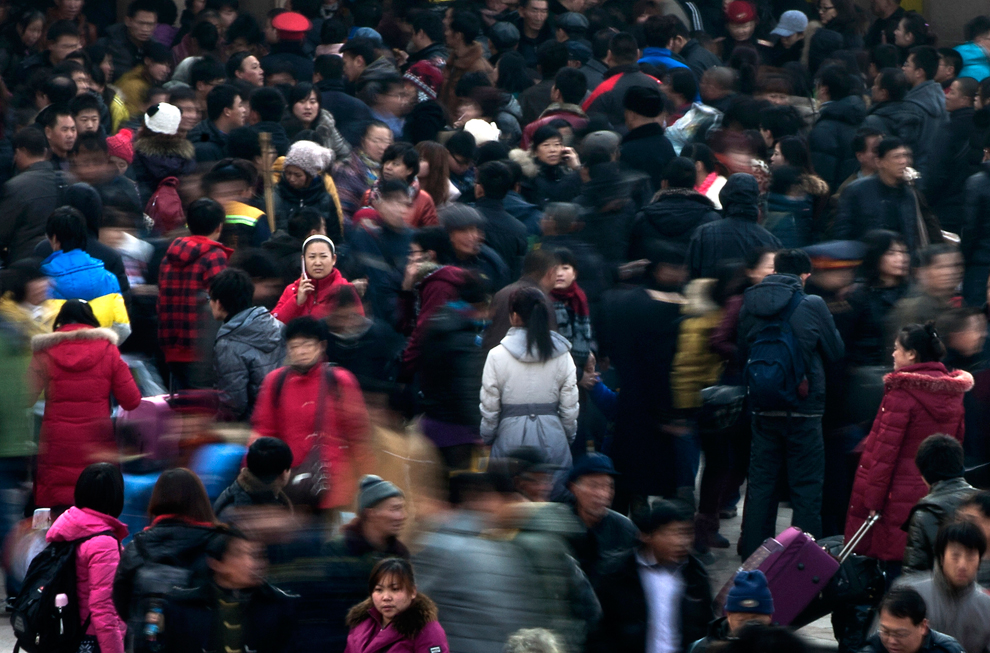
People rush to catch their train at Beijing station on January 8, 2012. (Andy Wong/Associated Press
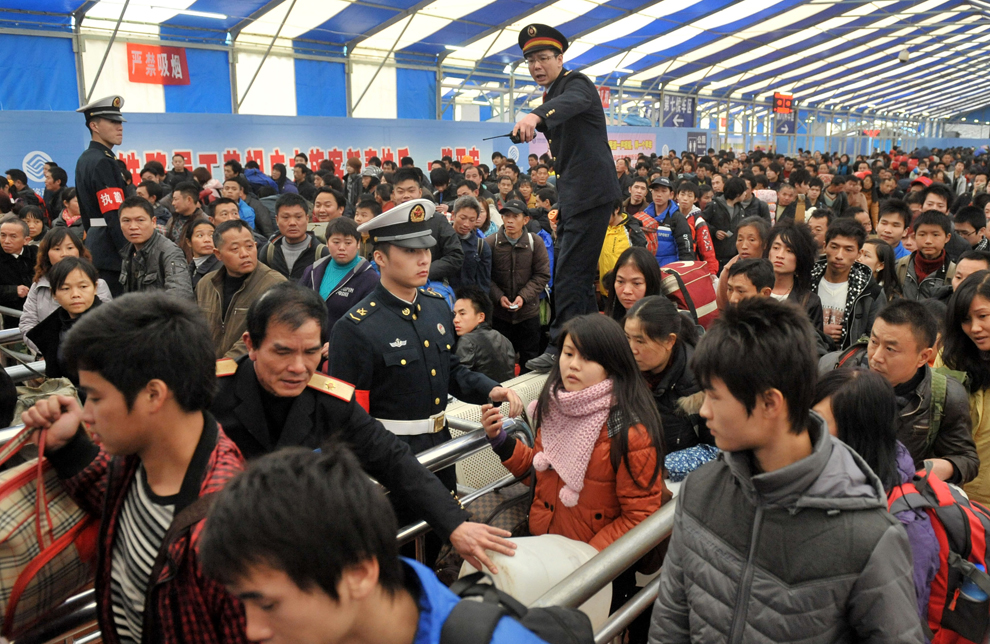
Passengers queue up to board their trains at a railway station in Fuzhou, China on January 8, 2011. (STR/AFP/Getty Images
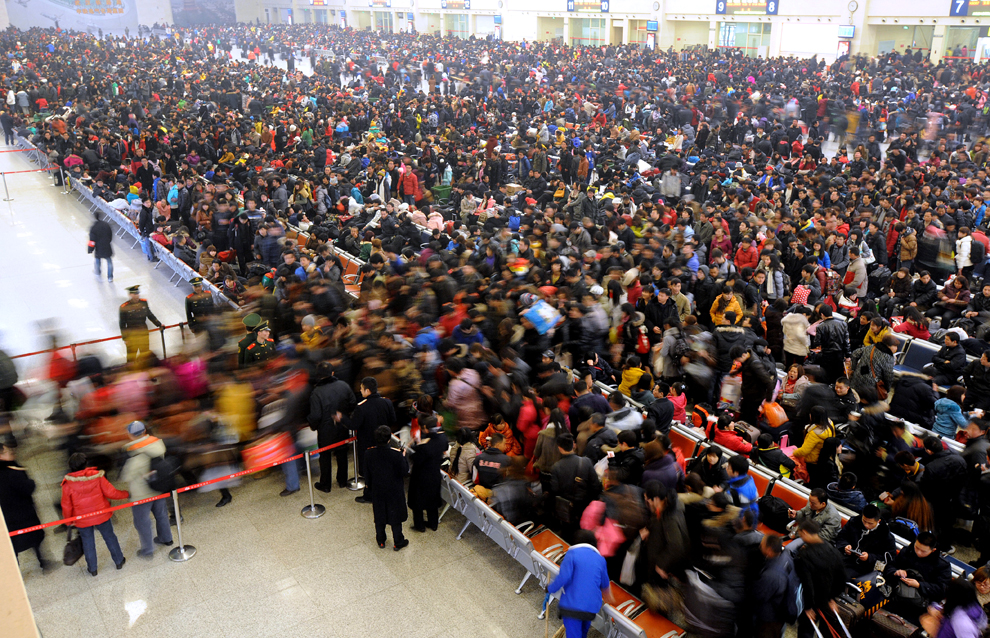
Passengers queue up to board trains as they return home for the lunar new year holiday at a railway station in Wuhan, China on January 13, 2012. (STR/AFP/Getty Images)

A crowd relaxes in a train compartment heading for northern Zhengzhou from Urumqi on January 18, as they had been through over thirty hours on the 3000 kilometer trip. (STR/AFP/Getty Images
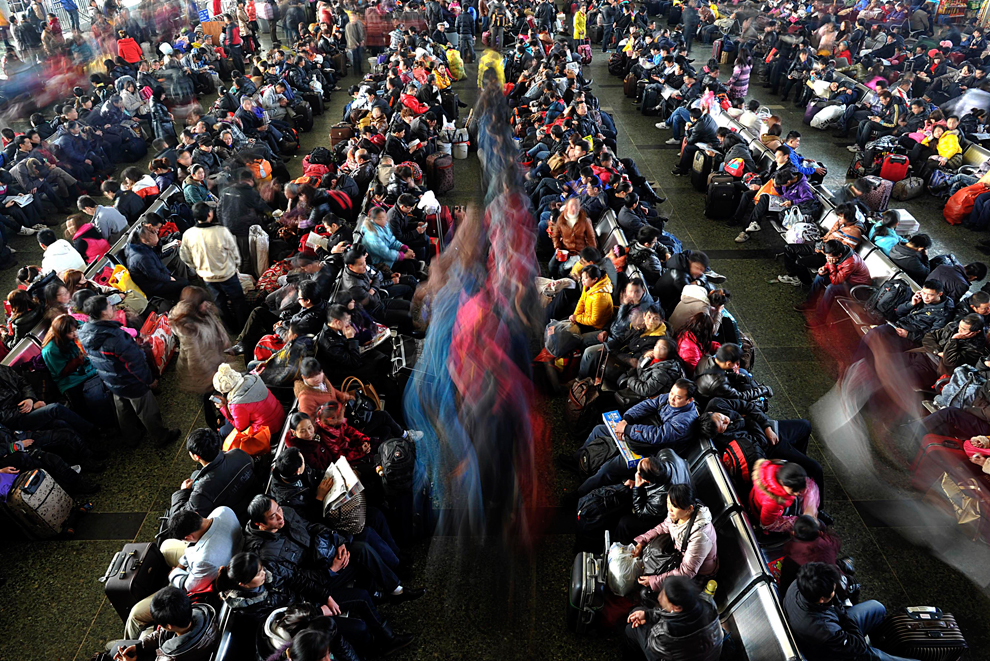
Passengers wait to board trains at a train station in Chengdu, China on January 18, 2012. (Associated Press
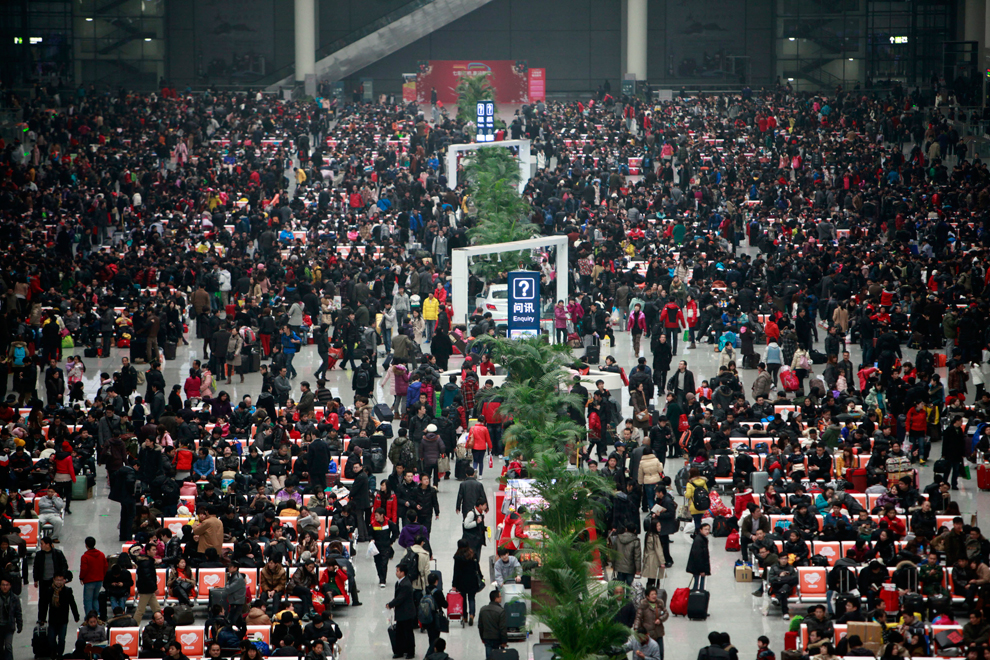
Passengers wait to board trains at the Hongqiao Train Station in Shanghai on January 19, 2012. (Qilai Shen/Bloomberg
The Boston Globe
Comments