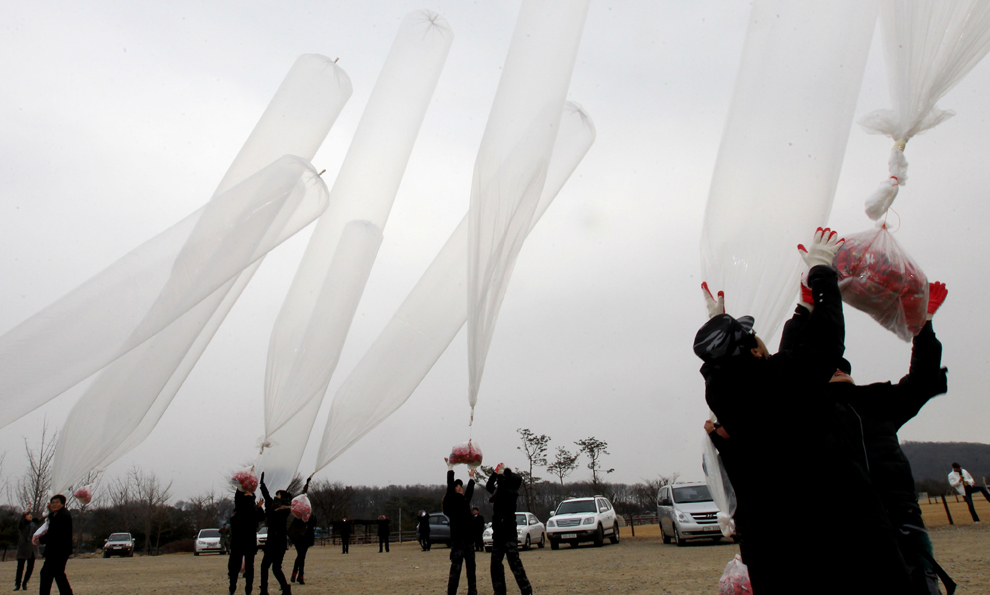
Former North Korean defectors living in South Korea release balloons carrying snacks in Ganghwa near the Demilitarized Zone dividing the two Koreas on January 20, 2012. About 100 kgs of Choco Pie, the thick wafer-like confection made in the South but also popular in the North and abroad, were launched by 20 large balloons across the border. (Yonhap/AFP/Getty Images
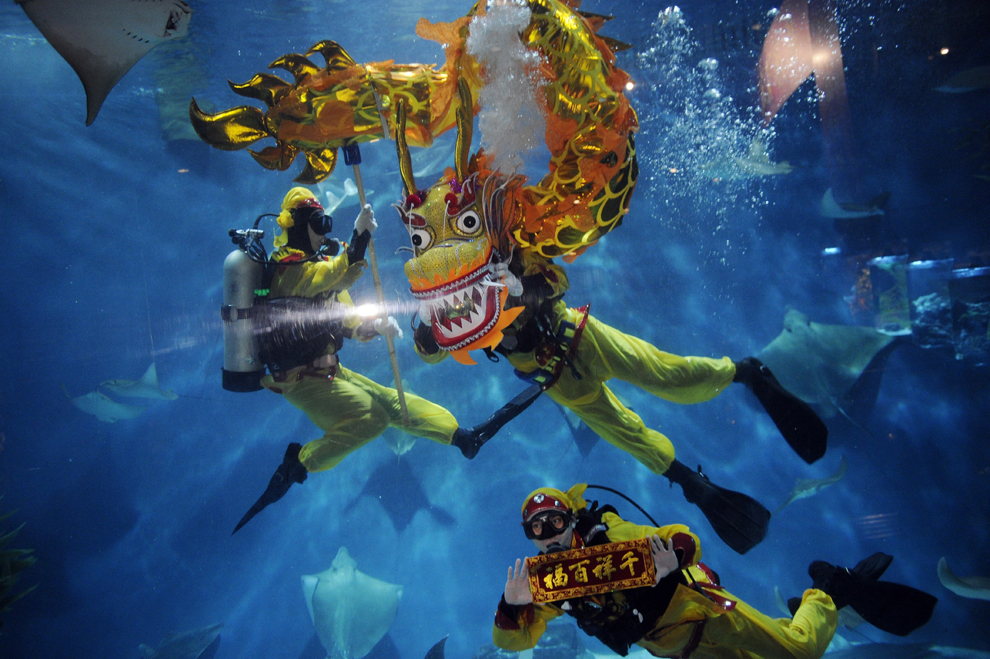
Scuba divers perform a dragon dance at the Shanghai aquarium to celebrate the upcoming Year of the Dragon on January 20, 2012. (Peter Parks/AFP/Getty Images

A fire breather performs in Chinatown in Manila a day before lunar new year on January 22, 2012. (Noel Celis/AFP/Getty Images
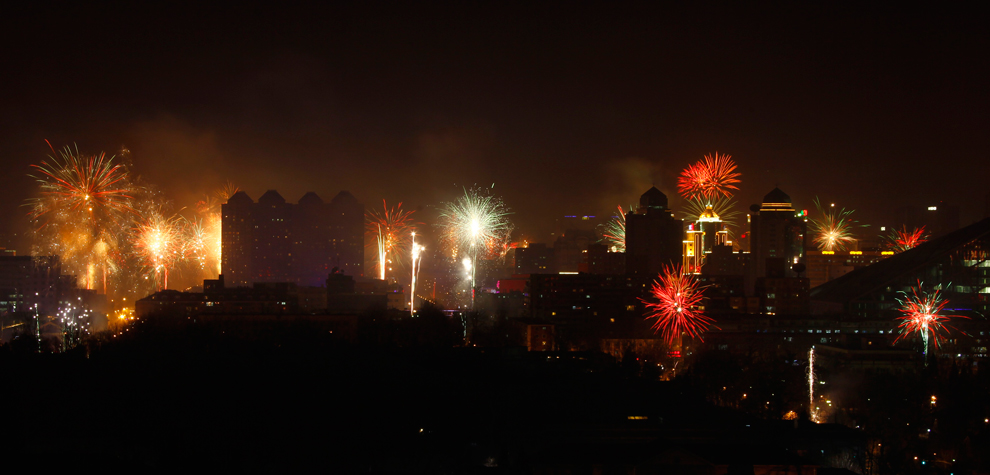
Fireworks light up the skyline of Beijing as residents celebrate the start of the lunar new year on January 23, 2012. (David Gray/Reuters)
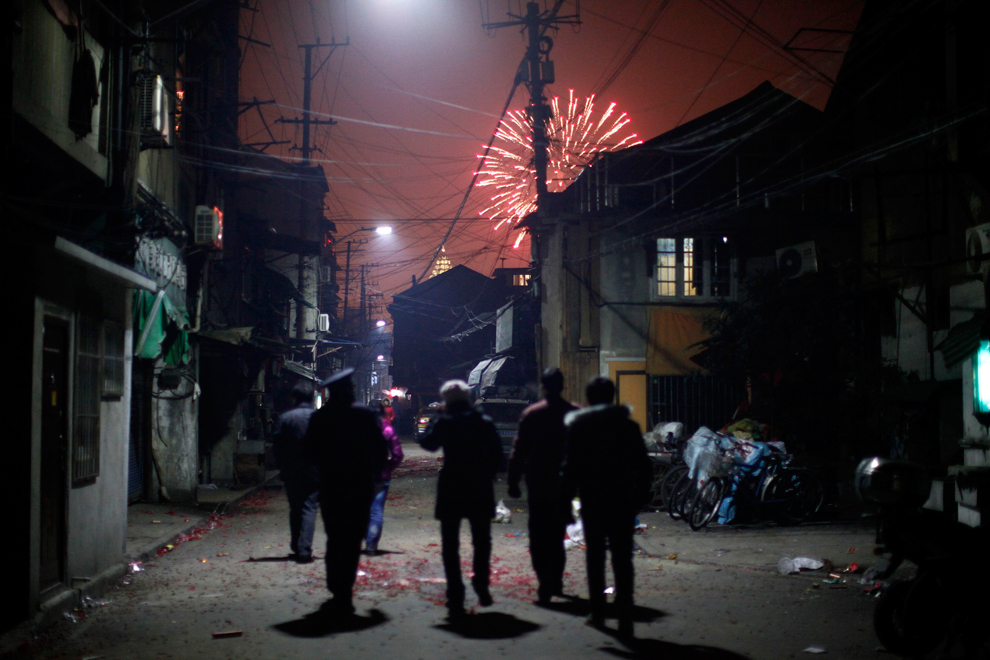
Fireworks explode in Shanghai on January 22, 2012 celebrating the Year of the Dragon. (Carlos Barria/Reuters

People rush to place joss sticks at the Guan Yin temple in Singapore on January 23, 2012. Worshippers gather annually at the temple on the eve of the lunar new year with hopes to be the first person to offer joss sticks when the clock strikes midnight, believed to bring prosperity and luck. (Edgar Su/Reuters)
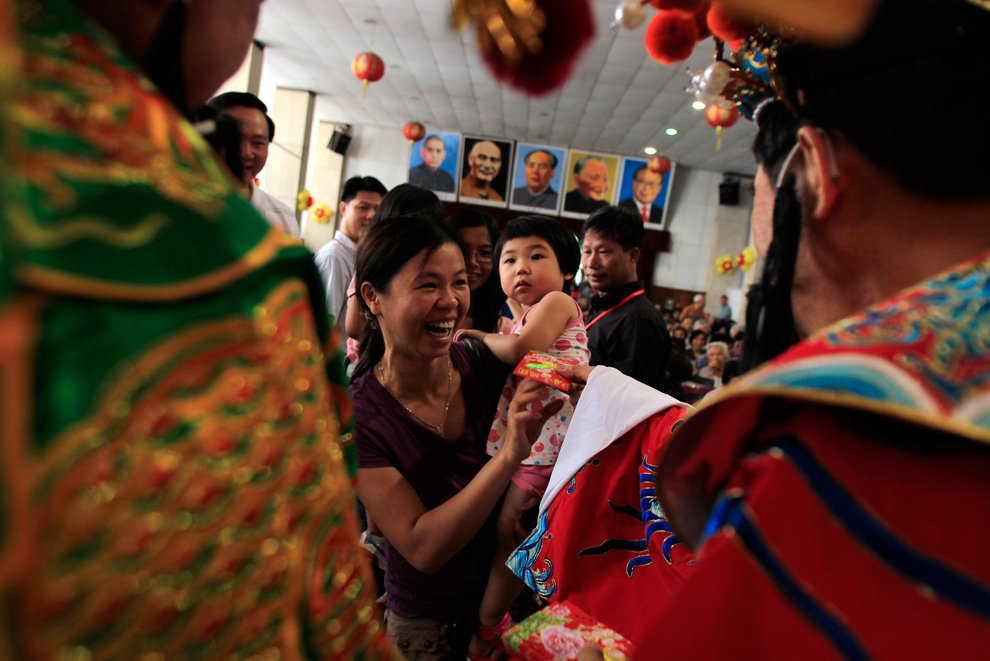
A member of the Chinese community holds her child as she receives a red packet, a monetary gift given during holidays or special occasions, during celebrations in Lima, Peru on January 22, 2012. (Pilar Olivares/Reuters

People burn incense to pray for good fortune on the first day of the lunar new year at Yonghegong Lama Temple in Beijing on January 23, 2012. (Jason Lee/Reuters
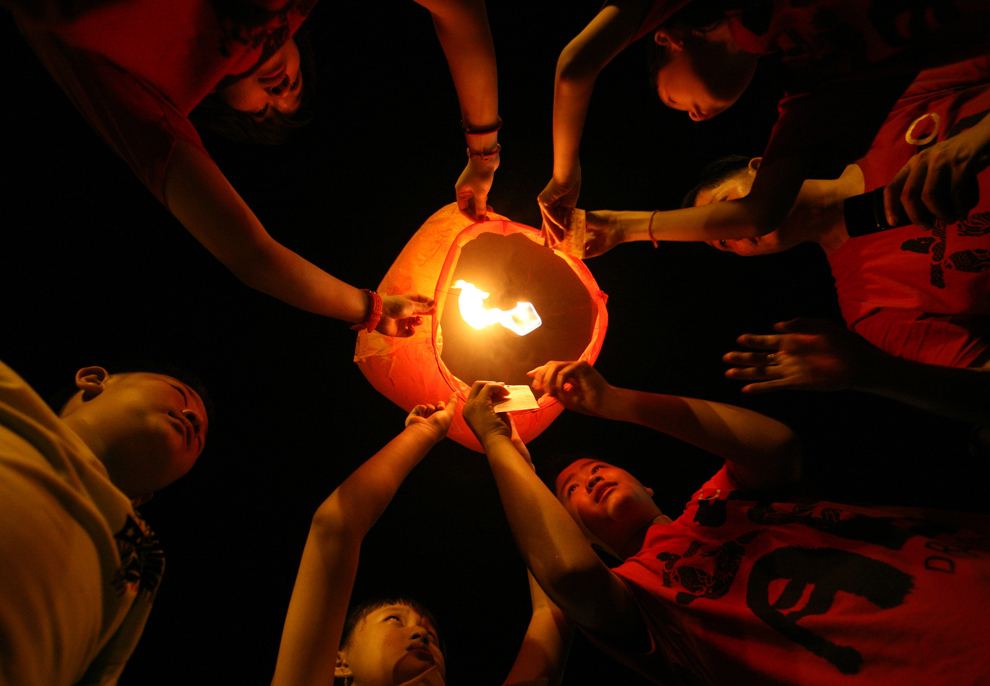
Indonesian ethnic Chinese hold a lantern together before releasing it on January 22, 2012 to celebrate the lunar new year in Medan, North Sumatra, Indonesia. (Binsar Bakkara/Associated Press)
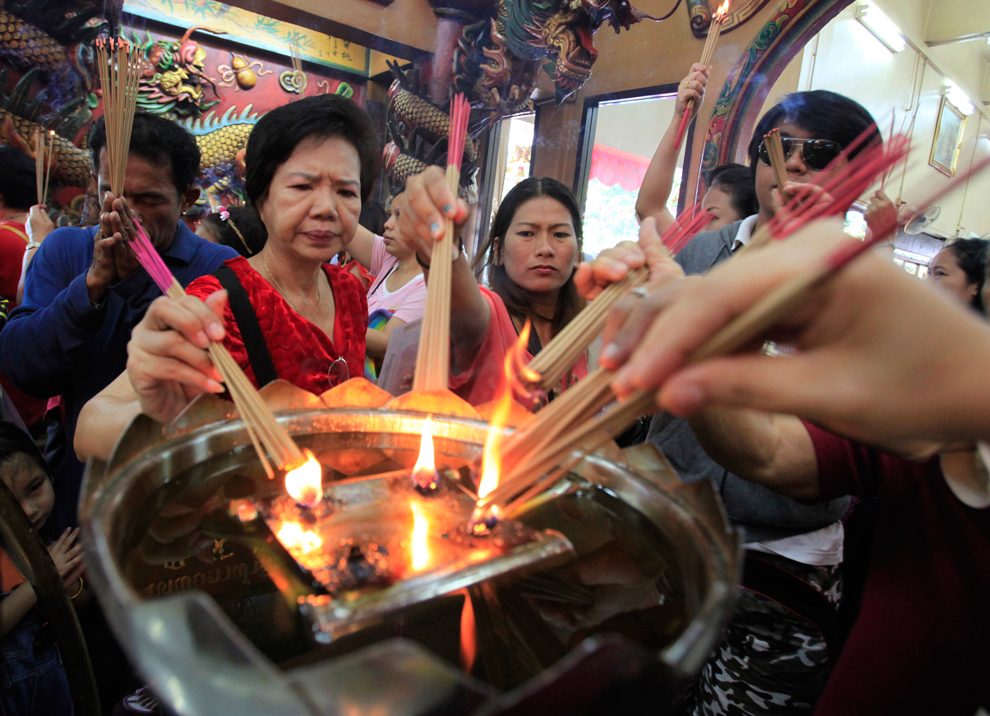
Ethnic Chinese people burn joss sticks to celebrate the lunar new year at Hea Tek Tunk Chinese Temple in Bangkok, Thailand on January 23, 2012. (Sakchai Lalit/Associated Press
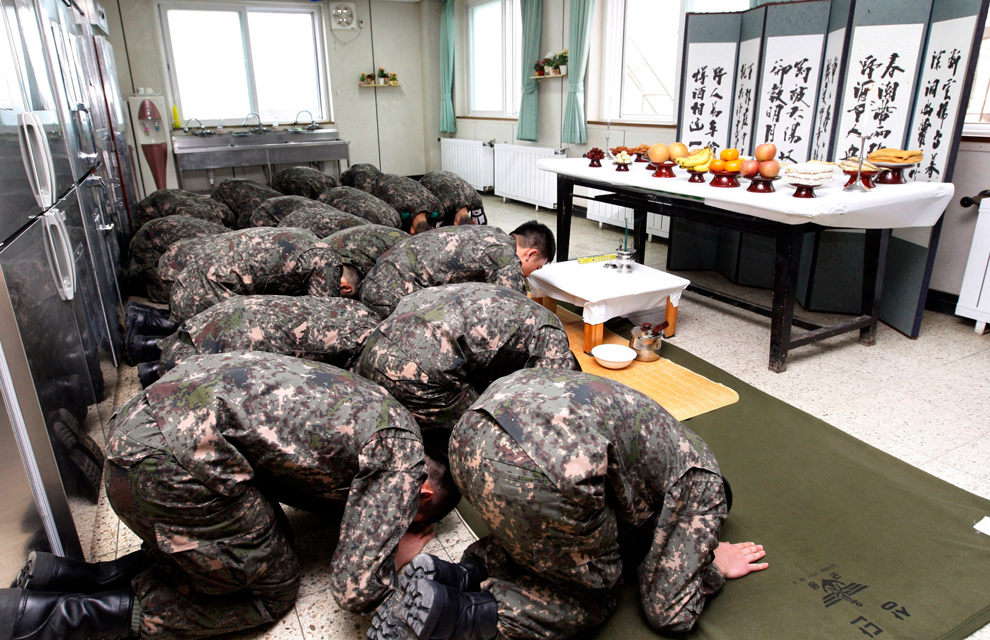
South Korean army soldiers bow to respect their ancestors as they celebrate lunar new year at their base near the Demilitarized Zone that separates the two Koreas in Cheorwon, South Korea on January 23, 2012. (Kag Un Na-rye/Yonhap/Associated Press)

North Korean children celebrate the first day of the lunar new year in Pyongyang, North Korea on January 23, 2012. Pyongyang residents said they were encouraged to celebrate the traditional holiday as they usually do, despite the death of Kim Jong Il, only the second leader North Koreans have known since the nation was founded in 1948. (Kim Kwang Hyon/Associated Press
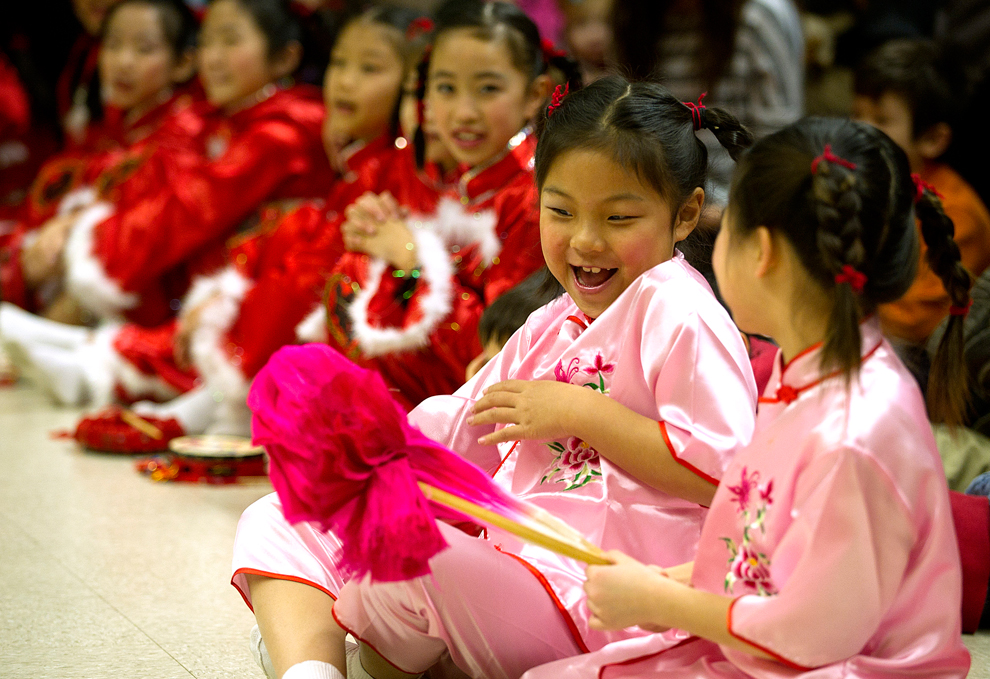
Lauren Tian (left) and Brianna Liu laugh as other members of the Winchester School of Chinese Culture performs a dance as part of the lunar new year celebration at Franklin Park Zoo in Boston on January 14, 2012. (Essdras M Suarez/Globe staff
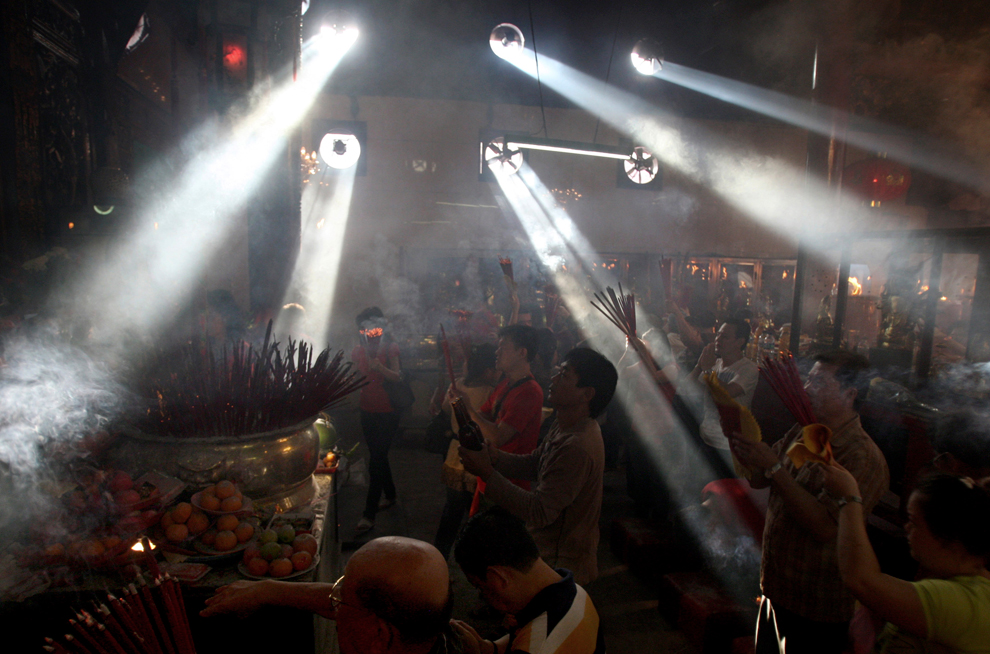
Indonesian ethnic Chinese pray during lunar new year celebrations at Dharma Bakti temple in Jakarta on January 23, 2012. (Dita Alangkara/Associated Press
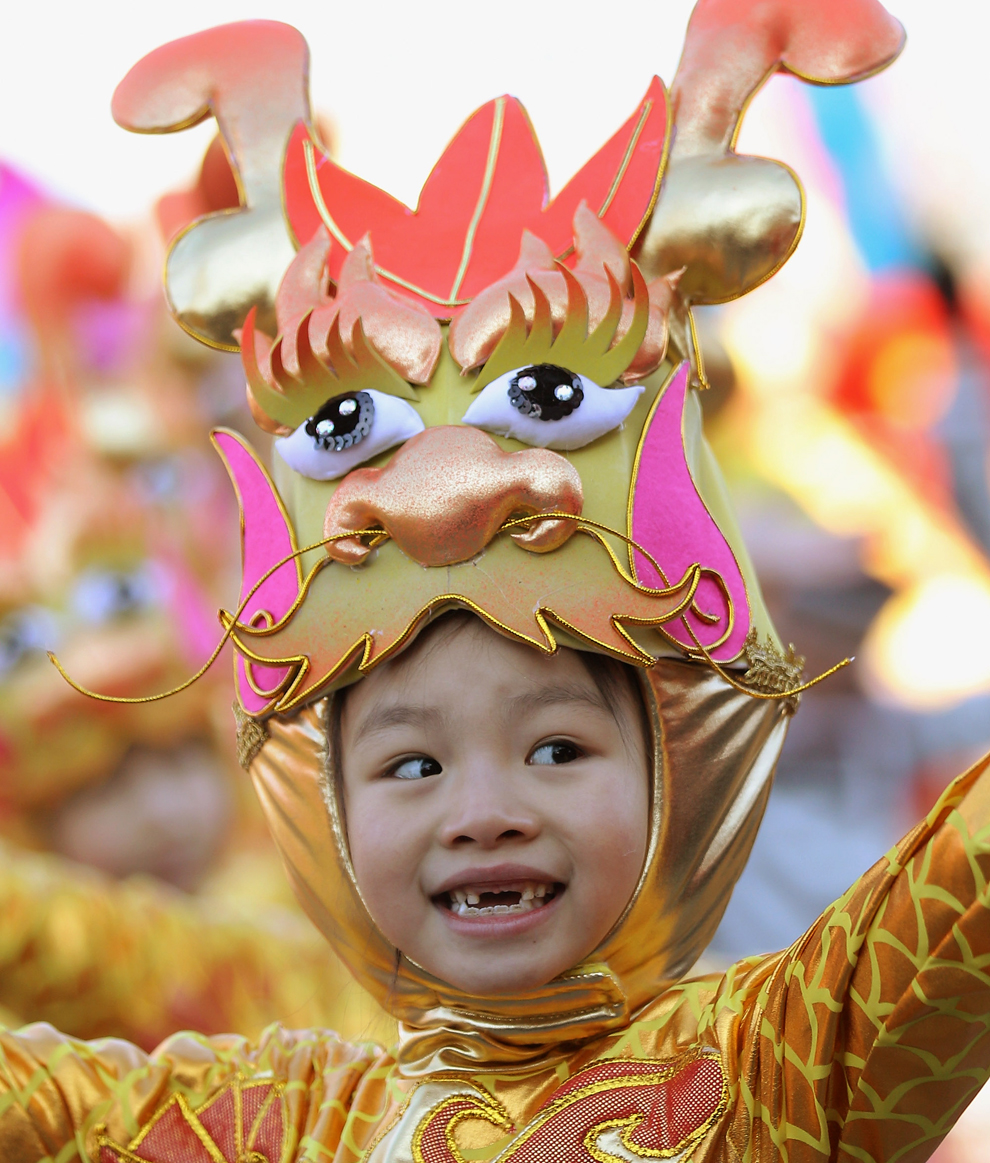
A young performer dressed in dragon costume prepares to perform at a temple fair to celebrate the Year of Dragon on January 22, 2012 in Beijing. (Feng Li/Getty Images
The Boston Globe
Comments