In Guatemala City, a place called "The Mine" can deliver both a means of survival and a grisly death. Every day, dozens of residents salvage a living by scouring the massive dump for scrap metal. Facing the threat of mudslides, collapses, and disease, they can potentially earn twice the daily minimum wage. Associated Press photographer Rodrigo Abd documented their efforts. -- Lloyd Young (EDITOR'S NOTE: Our apologies, but due to an illness on our staff, we were unable to post a Big Picture on Monday.)
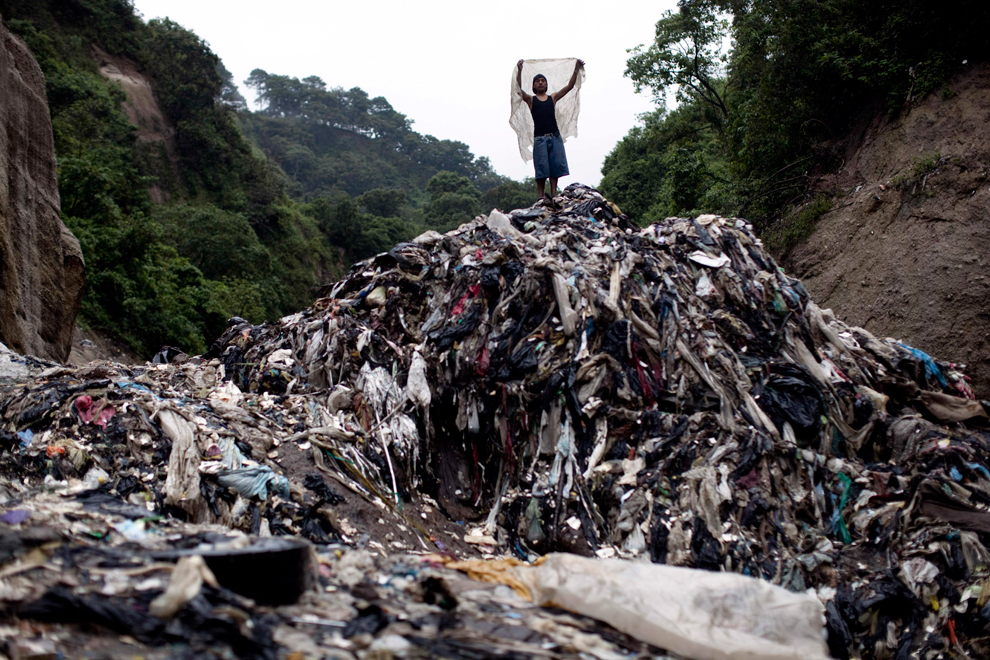
A man covers himself from the rain on a mound of garbage at the bottom of one of the biggest trash dumps in the city, known as "The Mine," in Guatemala City. Hundreds of informal workers descend daily into the mounds of the landfill and the rushing waters that come from a storm tunnel and a sewer at the bottom of a gorge to search for scrap metal to sell. This activity known locally as "mining" is extremely dangerous due to mud slides and collapses, but earns many of them about 150 quetzals ($20 dollars) a day, nearly twice the minimum daily wage. (Rodrigo Abd/Associated Press)
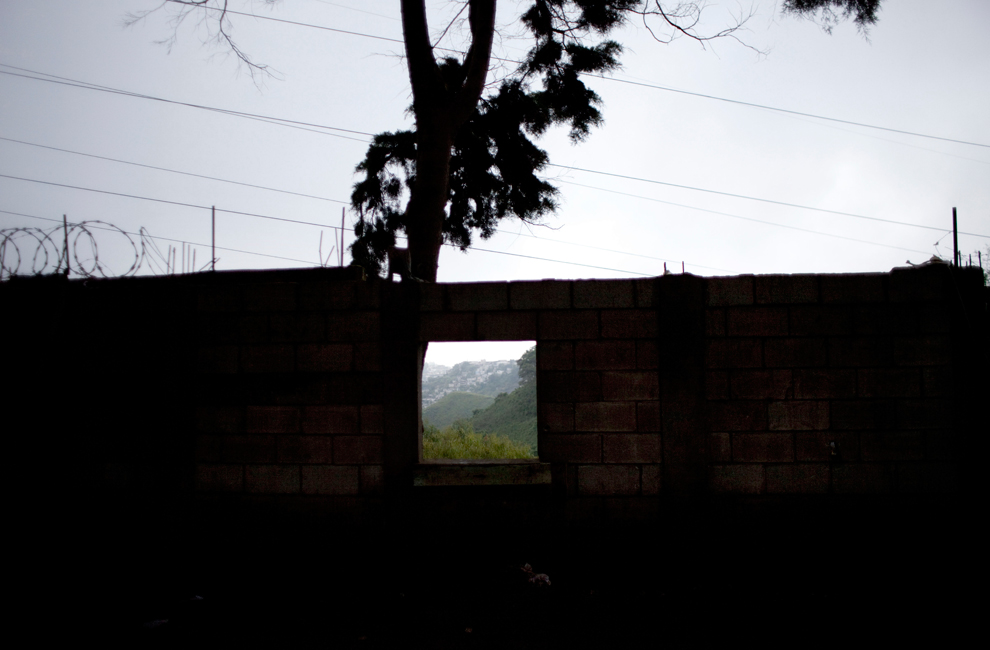
A window used as an entrance to "The Mine," one of Guatemala City's biggest trash dumps, is seen early in the morning. (Rodrigo Abd/Associated Press)

A gorge at the edge of one of the biggest trash dumps where workers look for scrap metal. (Rodrigo Abd/Associated Press)
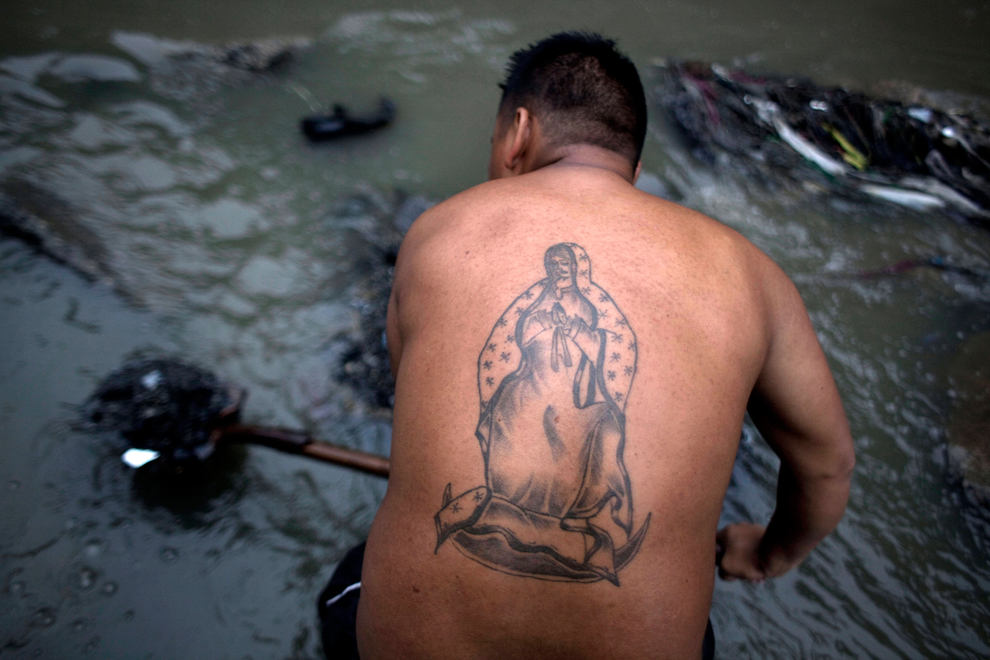
David Flores digs for scrap metal in contaminated water at the bottom of one of the biggest trash dumps in the city, known as "The Mine," in Guatemala City. (Rodrigo Abd/Associated Press
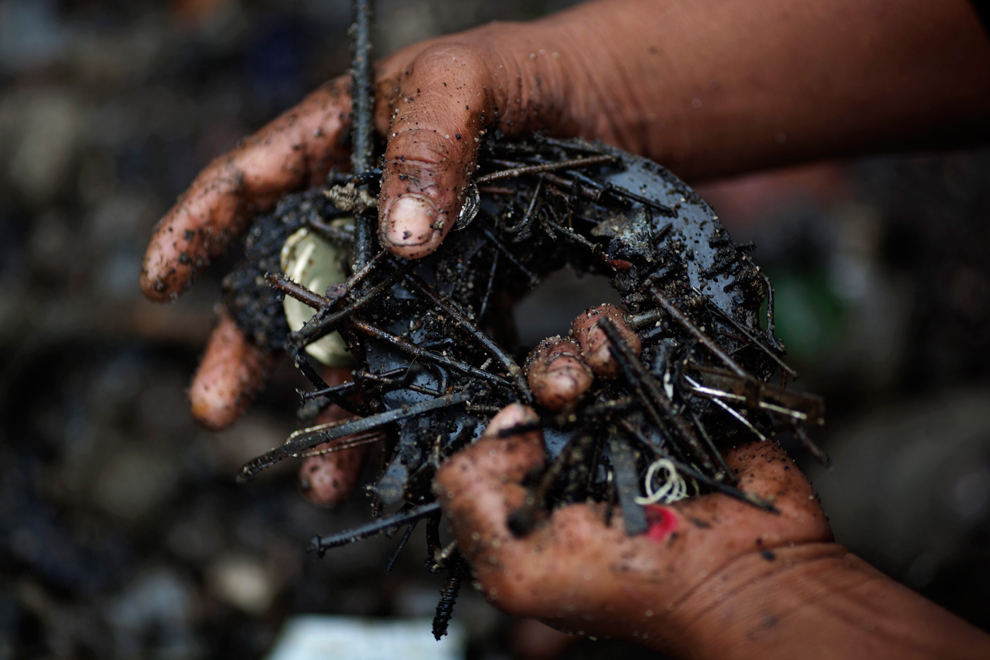
A man uses a magnet to find metal in the material collected from the contaminated water. (Rodrigo Abd/Associated Press)
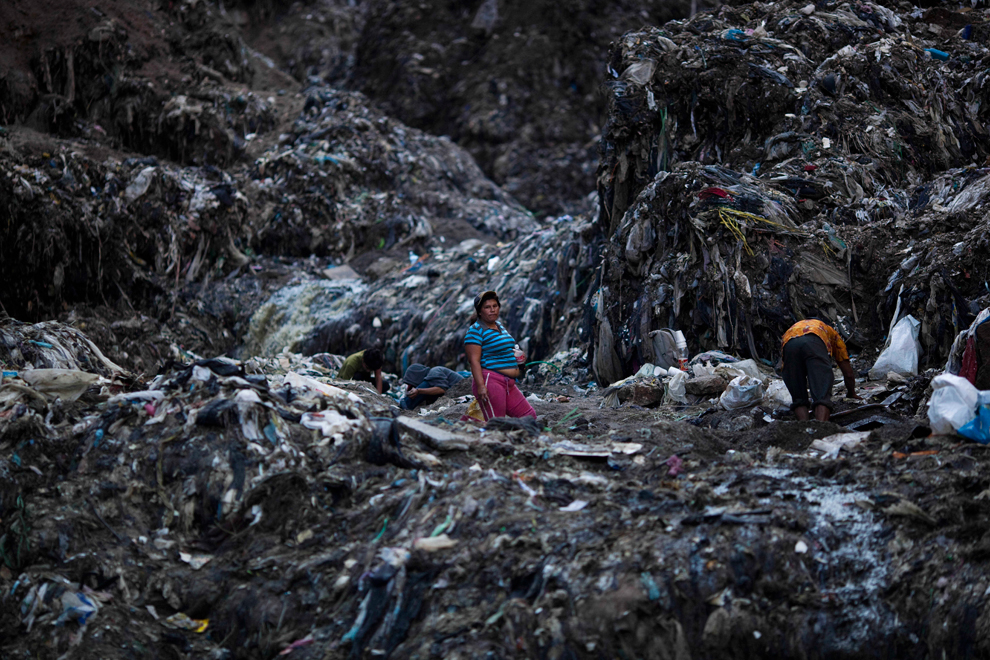
A woman stands amongst the debri as she searches for scrap metal. Hundreds of informal workers descend daily into the mounds of the landfill and the rushing waters that come from a storm tunnel and a sewer. (Rodrigo Abd/Associated Press
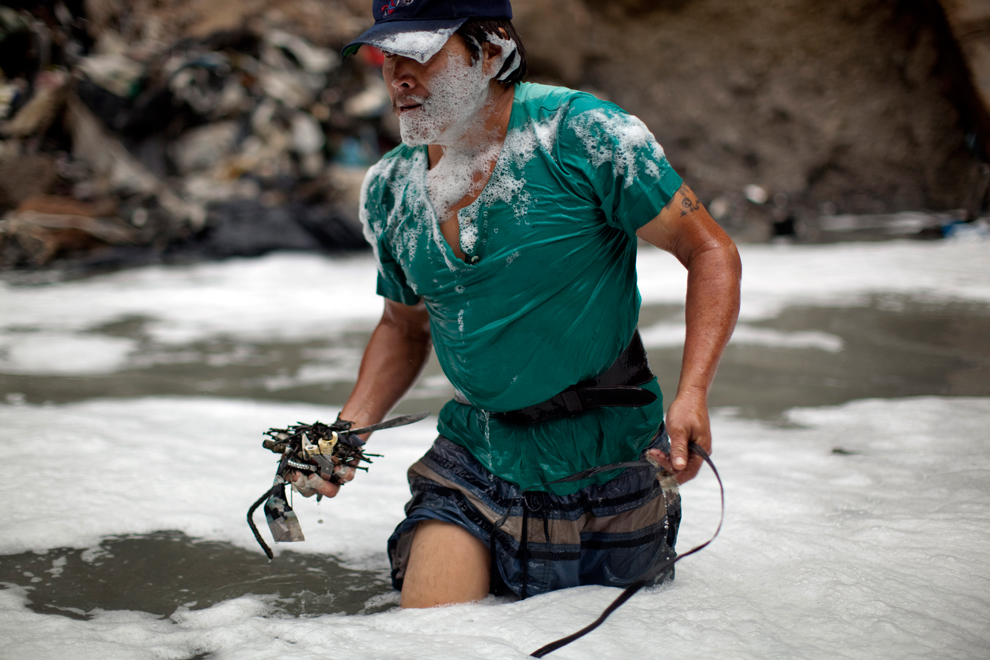
Miguel carries a hand full of metal he collected in the contaminated water. (Rodrigo Abd/Associated Press
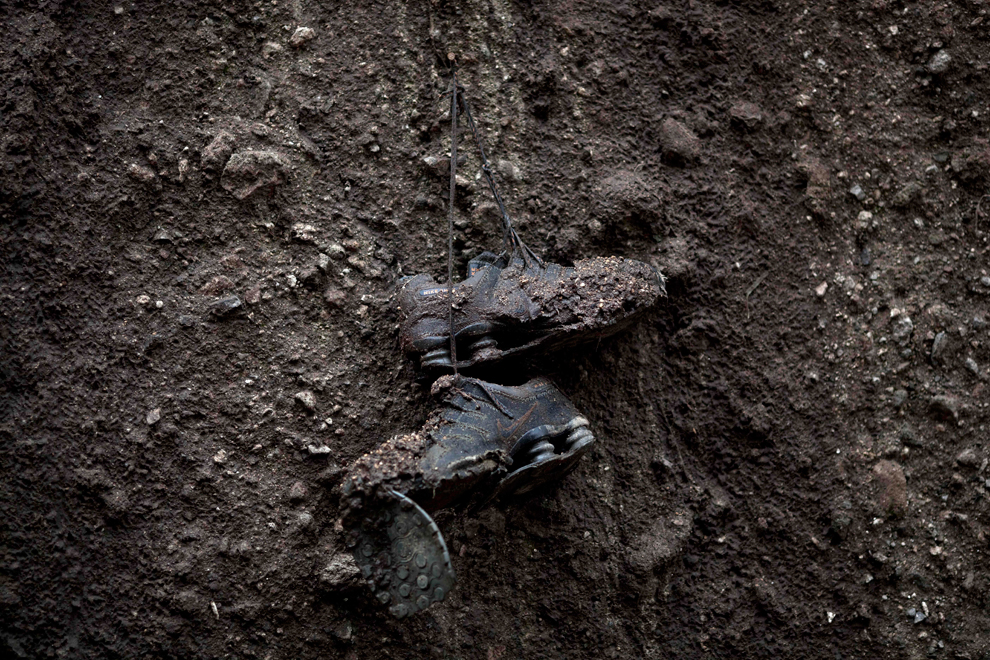
Mud caked sneakers hang from a nail in a mud wall at the bottom of the trash dump. (Rodrigo Abd/Associated Press
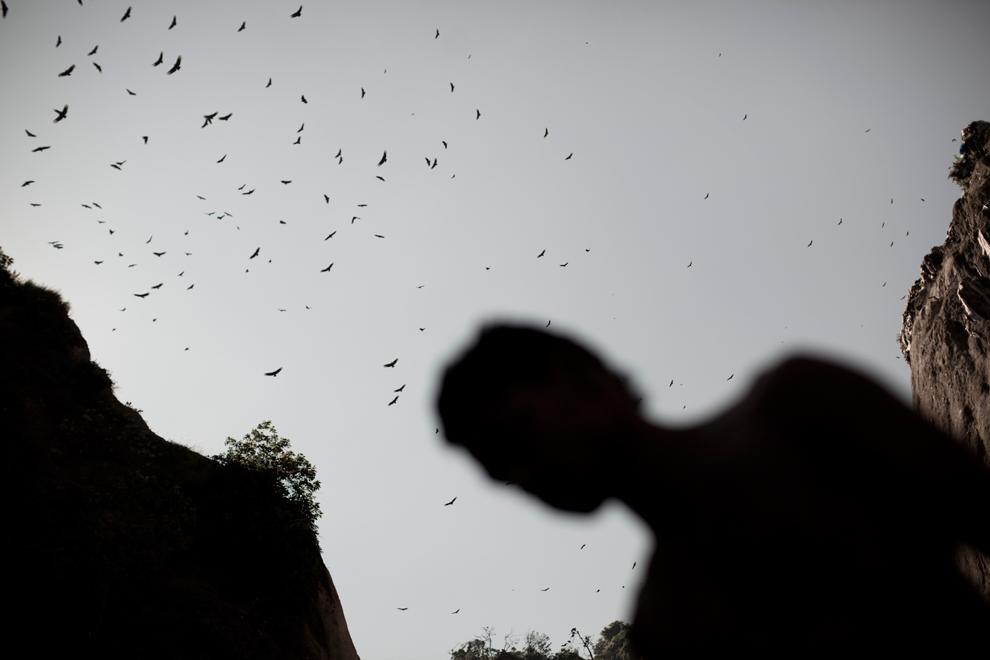
Vultures fly over men searching for scrap metal in the trash dump known as "The Mine". (Rodrigo Abd/Associated Press)

Irma (29, right) and Dora (30) carry sacks of metal they collected after working all night. (Rodrigo Abd/Associated Press)
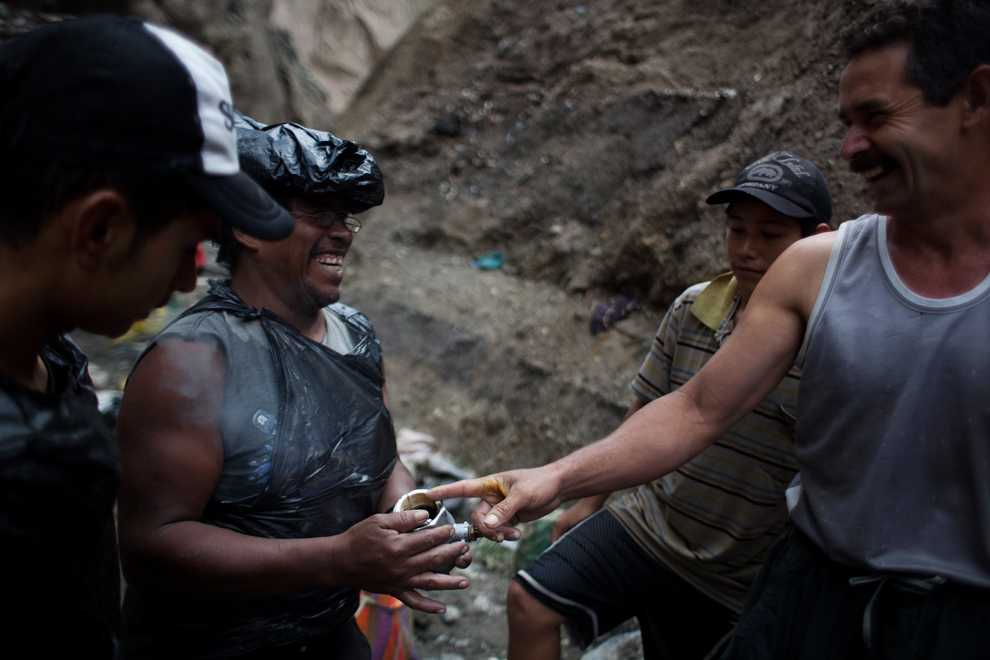
Julio (second from left) shows off what he found to other metal collectors. (Rodrigo Abd/Associated Press
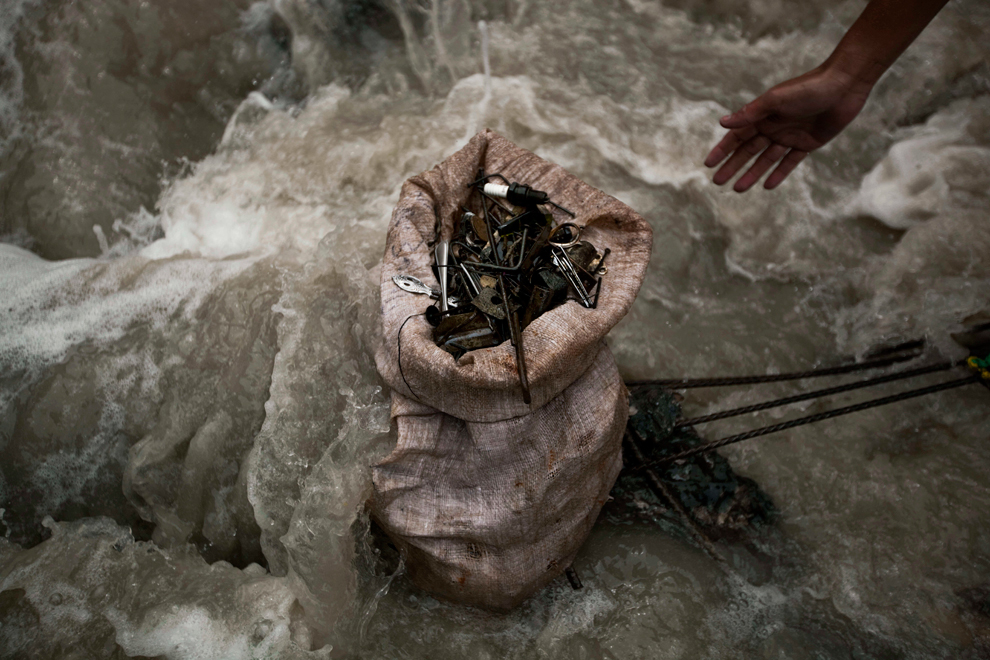
A collector reaches for a bag of metal he he collected in the trash mounds. (Rodrigo Abd/Associated Press)
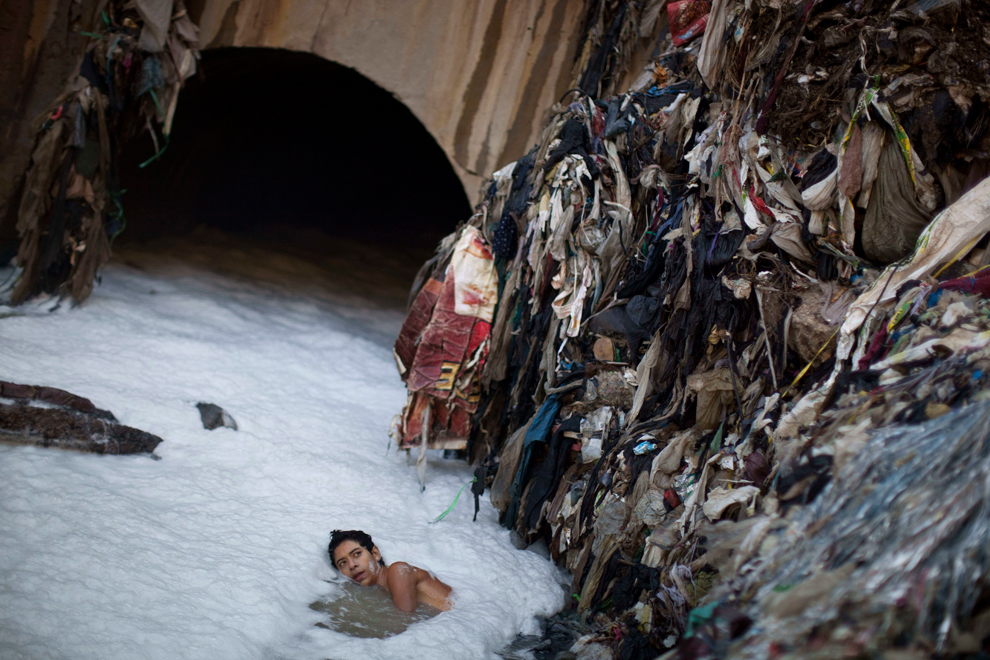
A young man who goes by the name Paleta searches for metal in contaminated water by a tunnel where the water from sewage converges with storm water runoff. (Rodrigo Abd/Associated Press
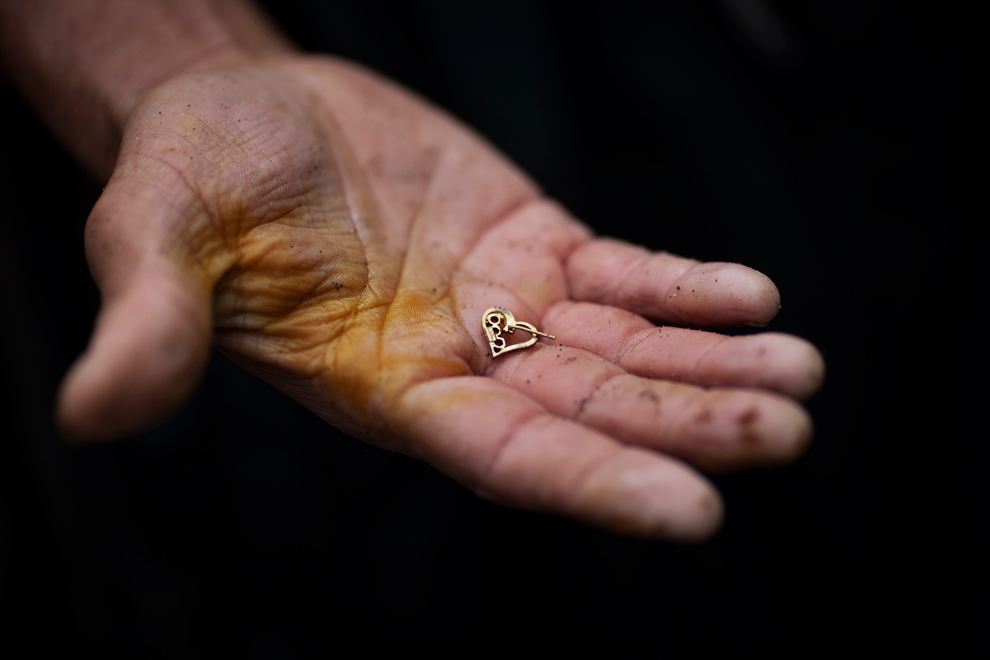
A man holds up a gold ring he found while searching for scrap metal. (Rodrigo Abd/Associated Press)
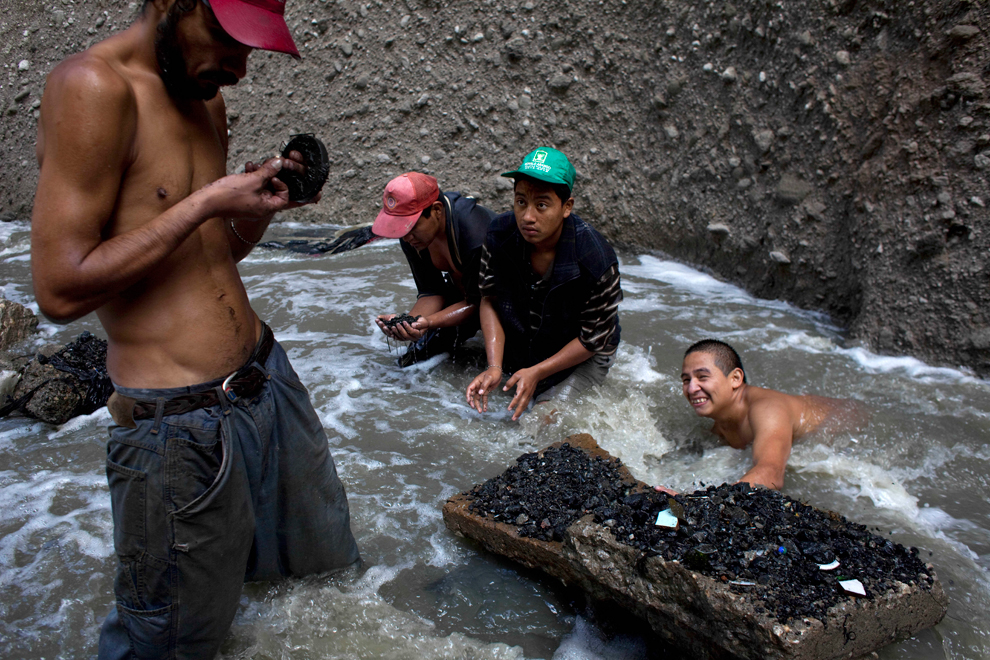
Men search for scrap metal in contaminated water, a task that earns many of them about 150 quetzals ($20 dollars) a day, nearly twice the minimum daily wage. (Rodrigo Abd/Associated Press)

A scale and ledger of a metal buyer sits at the top of the trash dump. (Rodrigo Abd/Associated Press)

Tomas Perez Hernandez (67) prepares to carry a sack of metal he collected from the bottom of one of the biggest trash dumps in the city, known as "The Mine," in Guatemala City. (Rodrigo Abd/Associated Press
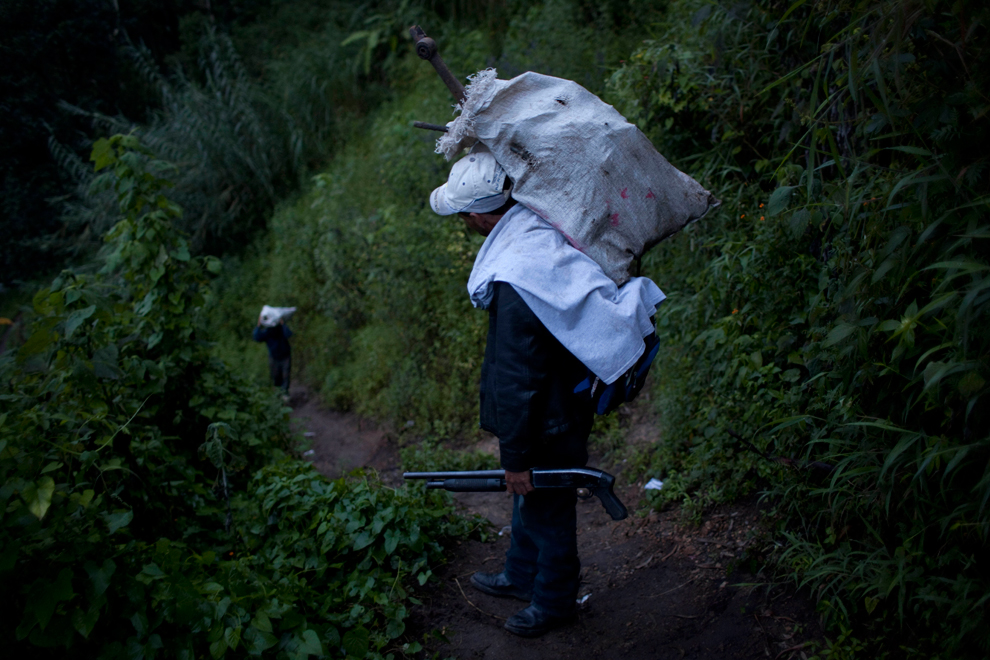
A man who gave only his first name as Ronnie carries a sack of metal he collected. (Rodrigo Abd/Associated Press

A boy who only gave his first name as Wilmer helped a fellow collector, Gilberto, weigh a sack of metals that they collected. (Rodrigo Abd/Associated Press)
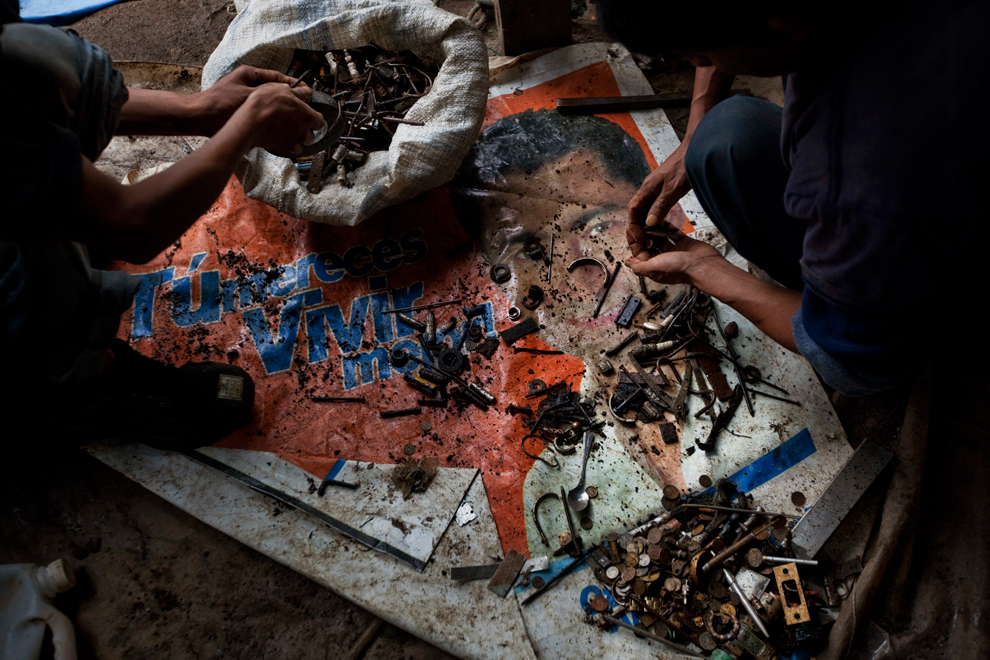
Men sort scrap metal they found at the bottom of the trash dump. (Rodrigo Abd/Associated Press
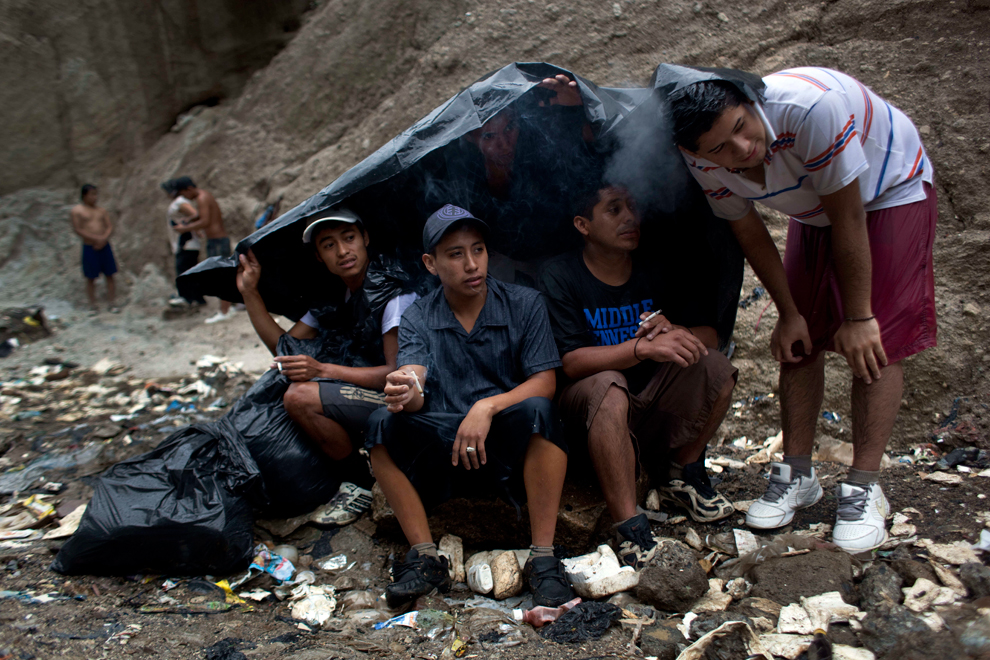
Young men rest from working in the rain searching for scrap metal in "The Mine". (Rodrigo Abd/Associated Press)
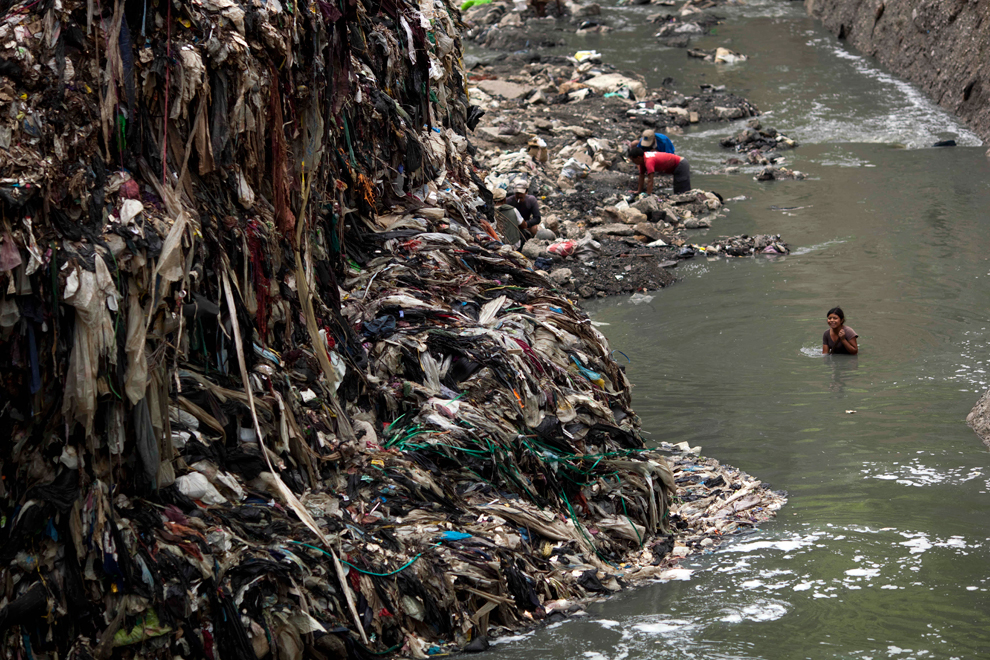
A youth who goes by the name Baluquita (15) searches for scrap metal in contaminated water next to a mountain of garbage. (Rodrigo Abd/Associated Press)
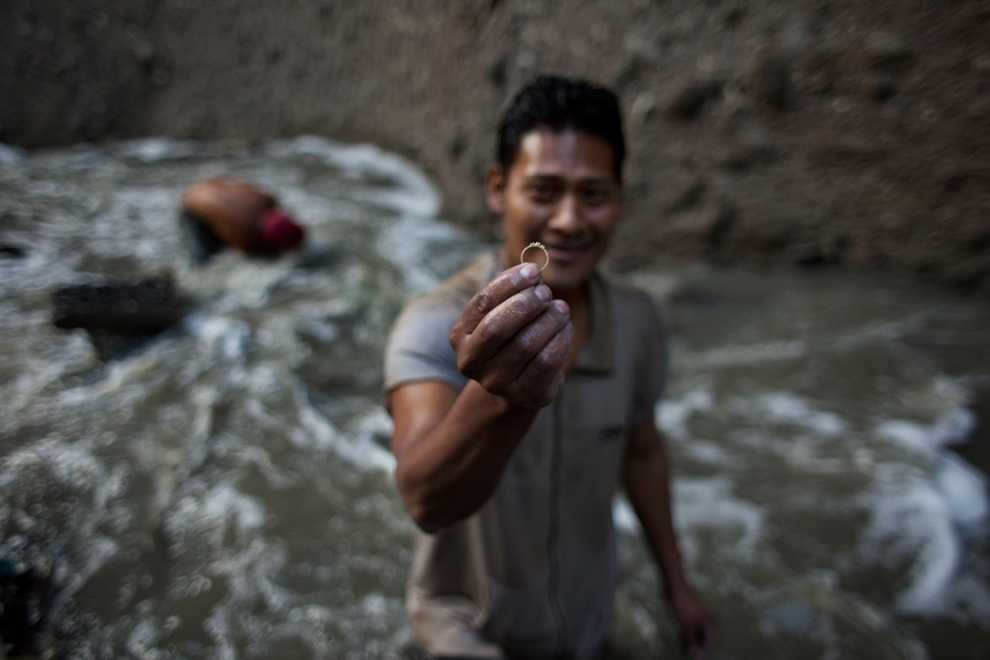
A man holds up a gold ring he found while searching for scrap metal. (Rodrigo Abd/Associated Press)
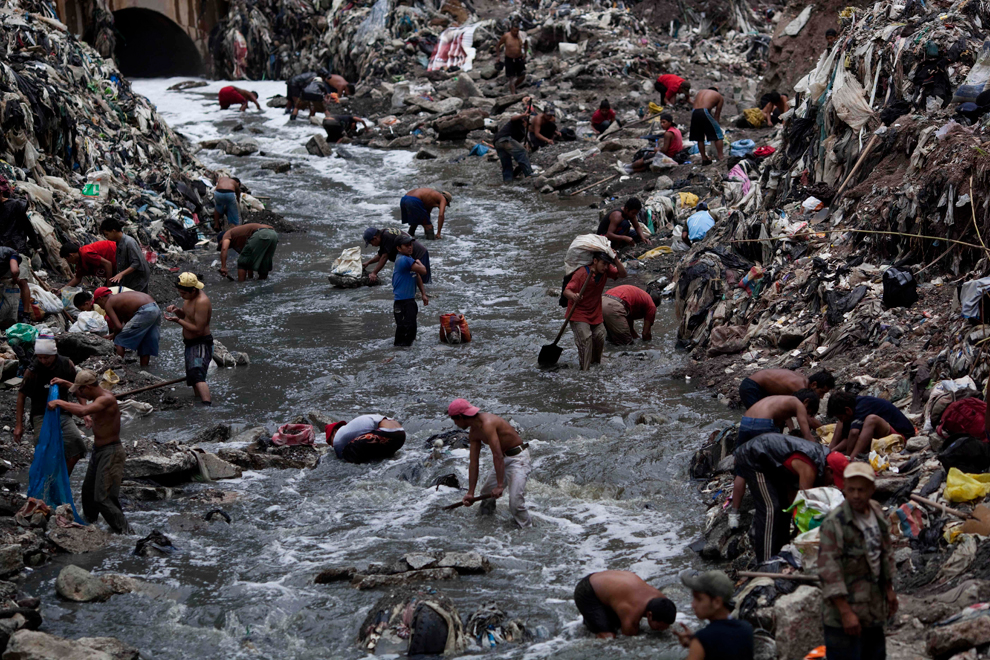
Informal workers search for scrap metal in contaminated water at the bottom of one of the biggest trash dumps in the city, known as "The Mine," in Guatemala City. (Rodrigo Abd/Associated Press)
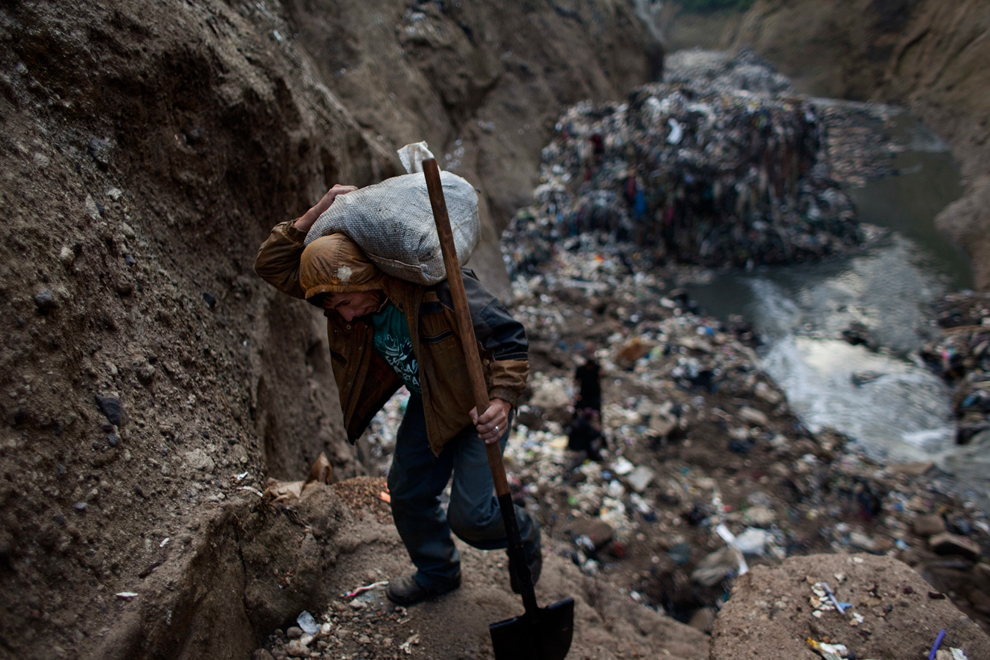
A man who only gave his first name as Wilmer carries a sack of metal he collected after working the entire day at the bottom of one of the biggest trash dumps in the city, known as "The Mine," in Guatemala City. Hundreds of informal workers descend daily into the mounds of the landfill and the rushing waters that come from a storm tunnel and a sewer at the bottom of a gorge to search for scrap metal to sell. This activity known locally as "mining" is extremely dangerous due to mud slides and collapses, but earns many of them about 150 quetzals ($20 dollars) a day, nearly twice the minimum daily wage. (Rodrigo Abd/Associated Press)
The Boston Globe
A man covers himself from the rain on a mound of garbage at the bottom of one of the biggest trash dumps in the city, known as "The Mine," in Guatemala City. Hundreds of informal workers descend daily into the mounds of the landfill and the rushing waters that come from a storm tunnel and a sewer at the bottom of a gorge to search for scrap metal to sell. This activity known locally as "mining" is extremely dangerous due to mud slides and collapses, but earns many of them about 150 quetzals ($20 dollars) a day, nearly twice the minimum daily wage. (Rodrigo Abd/Associated Press)
A window used as an entrance to "The Mine," one of Guatemala City's biggest trash dumps, is seen early in the morning. (Rodrigo Abd/Associated Press)
A gorge at the edge of one of the biggest trash dumps where workers look for scrap metal. (Rodrigo Abd/Associated Press)
David Flores digs for scrap metal in contaminated water at the bottom of one of the biggest trash dumps in the city, known as "The Mine," in Guatemala City. (Rodrigo Abd/Associated Press
A man uses a magnet to find metal in the material collected from the contaminated water. (Rodrigo Abd/Associated Press)
A woman stands amongst the debri as she searches for scrap metal. Hundreds of informal workers descend daily into the mounds of the landfill and the rushing waters that come from a storm tunnel and a sewer. (Rodrigo Abd/Associated Press
Miguel carries a hand full of metal he collected in the contaminated water. (Rodrigo Abd/Associated Press
Mud caked sneakers hang from a nail in a mud wall at the bottom of the trash dump. (Rodrigo Abd/Associated Press
Vultures fly over men searching for scrap metal in the trash dump known as "The Mine". (Rodrigo Abd/Associated Press)
Irma (29, right) and Dora (30) carry sacks of metal they collected after working all night. (Rodrigo Abd/Associated Press)
Julio (second from left) shows off what he found to other metal collectors. (Rodrigo Abd/Associated Press
A collector reaches for a bag of metal he he collected in the trash mounds. (Rodrigo Abd/Associated Press)
A young man who goes by the name Paleta searches for metal in contaminated water by a tunnel where the water from sewage converges with storm water runoff. (Rodrigo Abd/Associated Press
A man holds up a gold ring he found while searching for scrap metal. (Rodrigo Abd/Associated Press)
Men search for scrap metal in contaminated water, a task that earns many of them about 150 quetzals ($20 dollars) a day, nearly twice the minimum daily wage. (Rodrigo Abd/Associated Press)
A scale and ledger of a metal buyer sits at the top of the trash dump. (Rodrigo Abd/Associated Press)
Tomas Perez Hernandez (67) prepares to carry a sack of metal he collected from the bottom of one of the biggest trash dumps in the city, known as "The Mine," in Guatemala City. (Rodrigo Abd/Associated Press
A man who gave only his first name as Ronnie carries a sack of metal he collected. (Rodrigo Abd/Associated Press
A boy who only gave his first name as Wilmer helped a fellow collector, Gilberto, weigh a sack of metals that they collected. (Rodrigo Abd/Associated Press)
Men sort scrap metal they found at the bottom of the trash dump. (Rodrigo Abd/Associated Press
Young men rest from working in the rain searching for scrap metal in "The Mine". (Rodrigo Abd/Associated Press)
A youth who goes by the name Baluquita (15) searches for scrap metal in contaminated water next to a mountain of garbage. (Rodrigo Abd/Associated Press)
A man holds up a gold ring he found while searching for scrap metal. (Rodrigo Abd/Associated Press)
Informal workers search for scrap metal in contaminated water at the bottom of one of the biggest trash dumps in the city, known as "The Mine," in Guatemala City. (Rodrigo Abd/Associated Press)
A man who only gave his first name as Wilmer carries a sack of metal he collected after working the entire day at the bottom of one of the biggest trash dumps in the city, known as "The Mine," in Guatemala City. Hundreds of informal workers descend daily into the mounds of the landfill and the rushing waters that come from a storm tunnel and a sewer at the bottom of a gorge to search for scrap metal to sell. This activity known locally as "mining" is extremely dangerous due to mud slides and collapses, but earns many of them about 150 quetzals ($20 dollars) a day, nearly twice the minimum daily wage. (Rodrigo Abd/Associated Press)
The Boston Globe
Comments