FOTOGRAFÍAS: Earthquake in Nepal

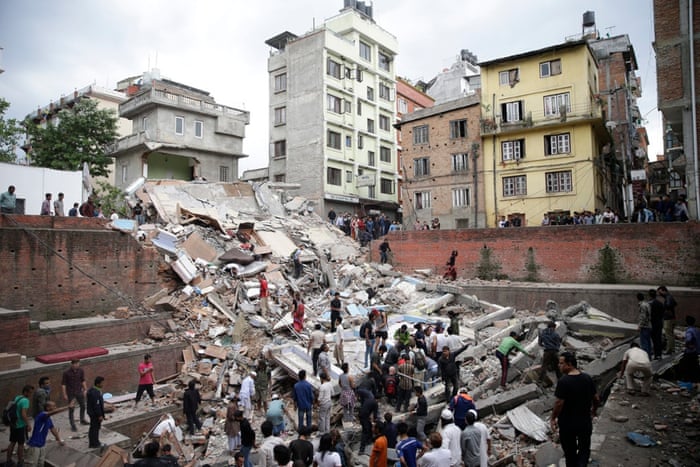
People search for survivors stuck under the rubble of a destroyed building in Kathmandu Photograph: Narendra Shrestha/EPA

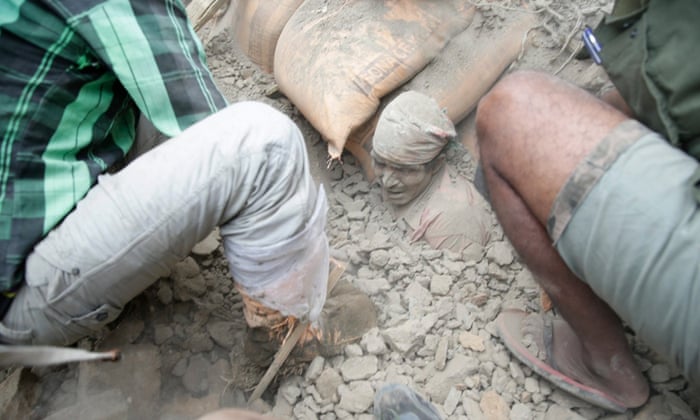
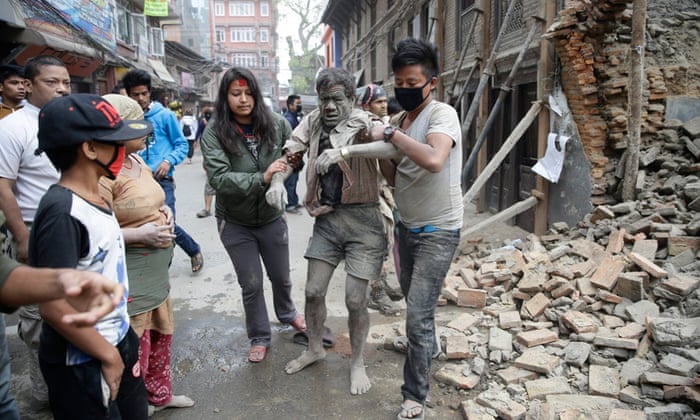
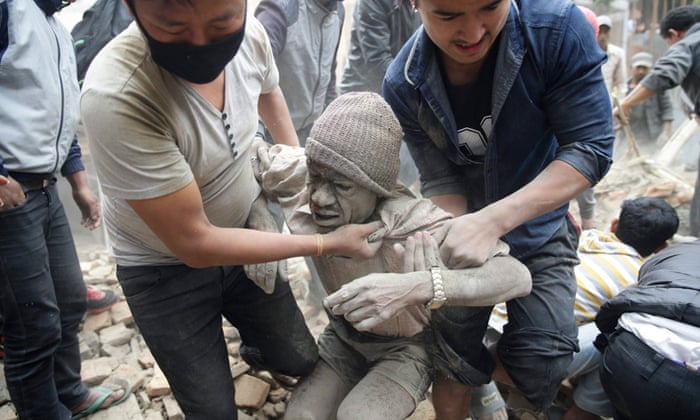
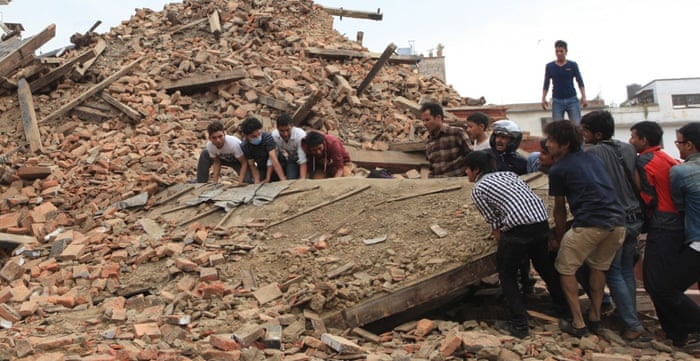
People try to free a man from the rubble of a destroyed building in Kathmandu Photograph: Narendra Shrestha/EPA

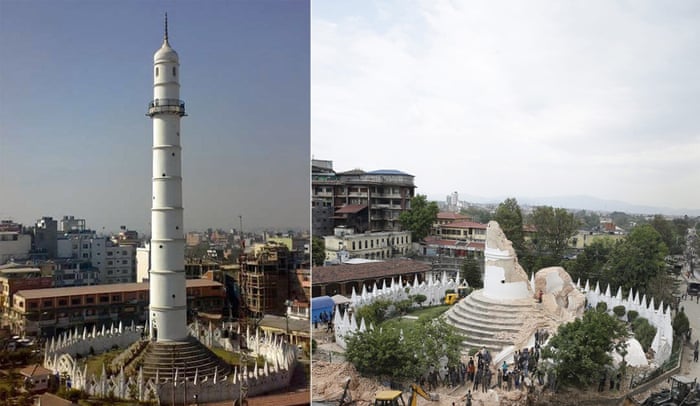
Historic Dharahara tower in Kathmandu before and after the earthquake Photograph: EPA

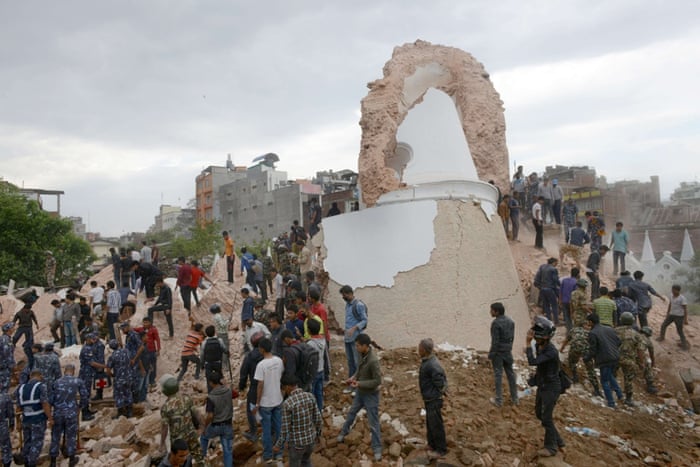
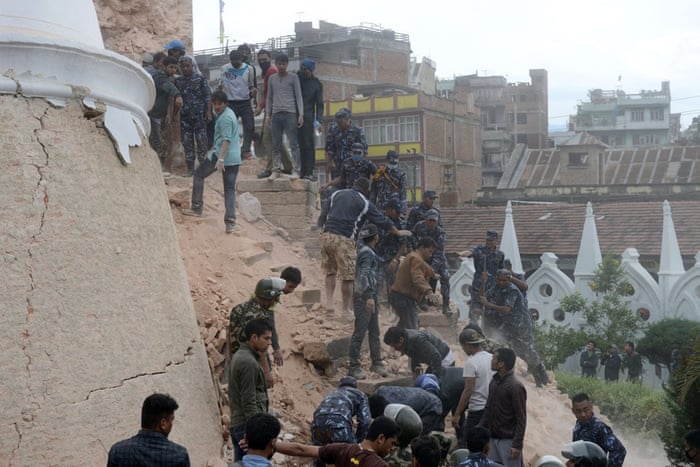
Nepalese rescue workers gather at the collapsed Dharahara Tower in Kathmandu Photograph: Prakesh Mathema/AFP/Getty Images

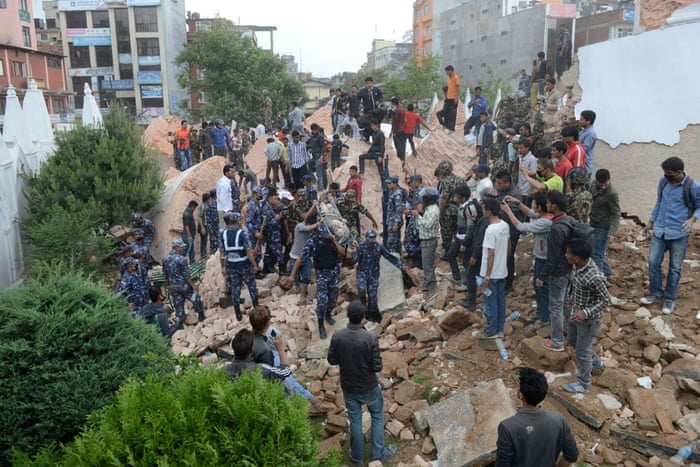
Nepalese rescue members move the body of a victim from the collapsed Dharahara Tower in Kathmandu Photograph: Prakesh Mathema/AFP/Getty Images

People free a man from the rubble of a destroyed building Photograph: Narendra Shrestha/EPA

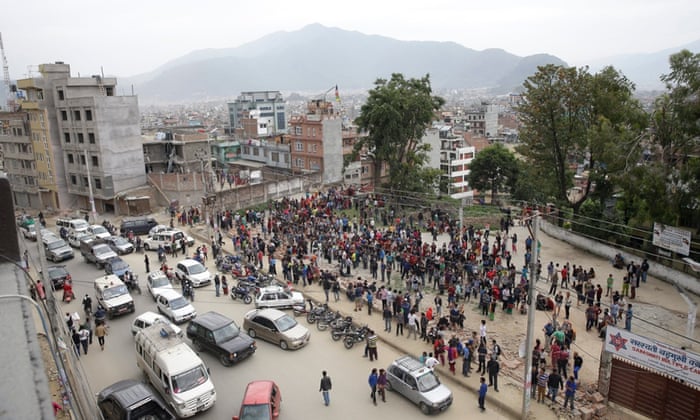
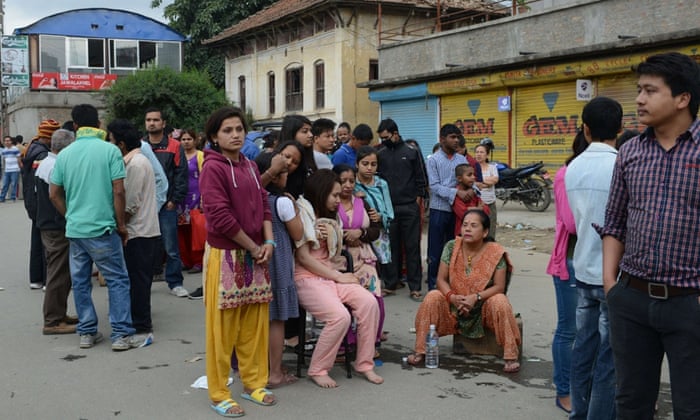
Citizens gather outside on a public square after an earthquake caused serious damage in Kathmandu Photograph: Narendra Shrestha/EPA

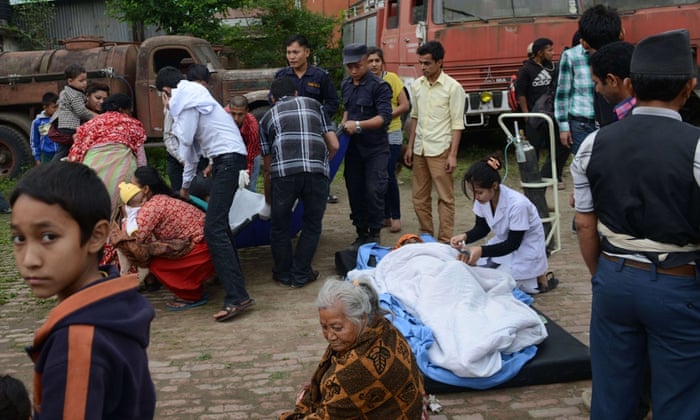
Nepalese health workers carry injured people into an open area following an 7.9 earthquake, at Lalitpur on the outskirts of Kathmandu Photograph: Prakesh Mathema/AFP/Getty Images

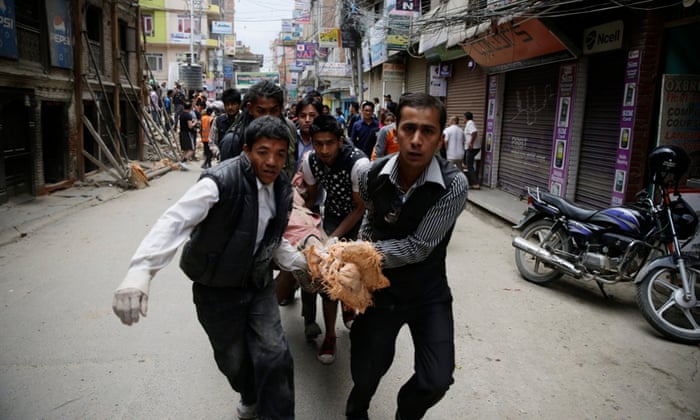
A group of men carry an injured person through the street after an earthquake caused serious damage in Kathmandu Photograph: Narendra Shrestha/EPA

An injured child lies on the ground outside the Medicare hospital in Kathmandu Photograph: Niranjan Shrestha/AP

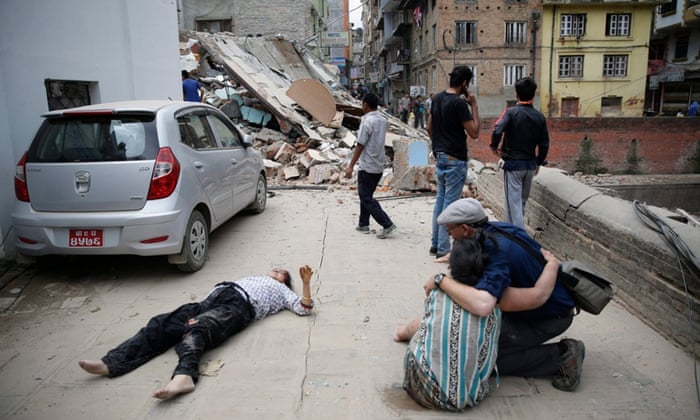
A man comforts a woman next to a seriously injured person on the ground after the earthquake Photograph: Narendra Shrestha/EPA

People free a man from the rubble of a destroyed building Photograph: Narendra Shrestha/EPA

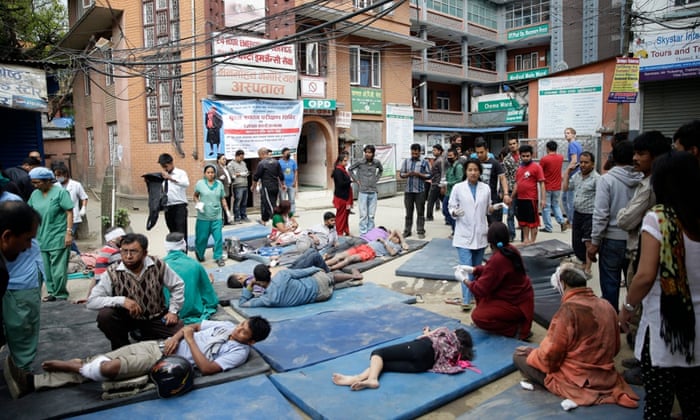
Health workers take care of injured people outside the Manmohan Memorial community hospital after an earthquake caused serious damage in Kathmandu, Nepal Photograph: Narendra Shrestha/EPA

Nepalese rescue members search at the collapsed Darahara Tower in Kathmandu Photograph: Prakesh Mathema/AFP/Getty Images

Nepalese people sit in an open area following the earthquake Photograph: Prakesh Mathema/AFP/Getty Images

People try to lift the debris from a temple at Hanumandhoka Durbar Square after the earthquake in Kathmandu Photograph: News Agency/REX Shutterstock

The Guardian
Comments

Popular posts from this blog

¿Se puede evitar el declinamiento mental severo en la edad avanzada?

Antes se creía que los adultos mayores perdían neuronas cada día y que la conexión de nuevos circuitos neurales era imposible. Sin embargo, investigaciones recientes indican que muchos factores —entre ellos el ejercicio físico y mental— pueden generar nuevos circuitos neurales y de esta manera ayudar a mantener una efectiva lucidez mental. Ciertas destrezas, como la reacción rápida y la memoria, tienden a declinar cuando se envejece, pero esos declinamientos son muy leves y no interfieren con la vida productiva, debido a que la experiencia y sabiduría de la gente mayor puede contrarrestar ese declinamiento. La investigación sugiere que la gente que le pone nuevos retos a su cerebro, tiene más probabilidad de mantener la función mental activa cuando envejece, y que incluso puede alejar el riesgo de Alzheimer. Por otra parte, dado que la actividad física reduce el estrés y la depresión actúa como un protector de las funciones cerebrales. Los estudios realizados en personas centenarias, s...

AUSTRALIAN OPEN: Christian Garin vs. Stefano Travaglia - Match Highlights (1R) | Australian Open 2020

La lucha por la vivienda en China | DW Documental

  De los 1.400 millones de habitantes que hay en China, alrededor del 60% vive actualmente en una ciudad; en 2030 será el 75%. La industria de la construcción está en auge y la codicia por los lucrativos terrenos edificables es inmensa. Sin embargo, en las ciudades de China no todos tienen derecho a una vivienda. Las ciudades modernas chinas están previstas exclusivamente para aquellas personas con buena formación, altamente calificadas o con buenos contactos políticos. Por eso, el derecho a la vivienda está sometido a varias condiciones que, al fin y al cabo, solo puede cumplir la clase alta política o económica de China. Pero más de la mitad de los residentes en la ciudad son lo que se denomina trabajadores migrantes. Proceden de zonas rurales y no tienen permiso de residencia en la ciudad. Su presencia solo es tolerada, pero no tienen derechos propios. Con sus trabajos como vendedores, proveedores de servicios, camareros, personal de limpieza, obreros de la construcción o mecáni...